Monday, March 10, 2014

Just Ride: A Book to Better Understand Ourselves By

Just Ride:
Reviewing one of the best cycling books out there


Just like the cover of the book suggests, this is a guide on how to just get out and enjoy riding our bicycles, without all of the ceremonial gear and accessories that exist in the racing world today. This book provides the reader with a back to basics approach on practical bike riding for the average person who isn't competing in the Tour De France or the BORAF ( Big Old Race Around France) as the author likes to phrase it. 

Grant Petersen is a bicycle engineer that started his career making bikes for Bridgestone Cycles in the 80's and then started his own company, Rivendell Bicycle Works in the mid 90's.  His bicycles nowadays have a cult following among those who simply seek an elegantly made, non-competitive touring bicycle that can be ridden on  and off roads in varying terrain. The bikes he makes for his current customers are made of steel, with intricate lug work and awesome paint schemes. They echo back to simpler times in cycling before carbon fiber became the rage and the standard for everyone else to follow by. 

Surprisingly, his book does not completely bash carbon fiber bikes like one would expect from an author like this to do. Instead, the author takes an objective approach in describing carbon fiber as a material that hasn't reached the level of development to be considered free of defects or not prone to catastrophic failure. He makes a comparison between different frame materials and makes a justifiably arguable case for steel bikes for the average person, something which I have been saying on this blog for at least a couple of years now. 

Being an engineer himself, Petersen dedicates several pages explaining the different dimensions on a bicycle and how different angles of these dimensions can have an effect on a bicycle's ride qualities. He also describes the advantages of having a steel fork with fork rake as opposed to having a carbon fiber fork or a straight bladed fork. The author notes that as we consider all these things, most bicycles today are designed for 150 pound skinny racers, not with the rest of us in mind. They are not designed for long term use, and are not designed practically for utilitarian use. They are modeled after professional athletes that can go through as many as 12 bikes in one season, with several component changes in between. 

There are a lot of things that I agree with the author on. The dieting advice in this book is great. I had already started a diet free of carbohydrates when I picked up this book at the bookstore a couple of days ago. The author mentions that carbs are actually harmful for cycling and that elite cyclists will eat carbs because their bodies genetically do not produce the same insulin as the rest of us. If we tried to eat as the pros do and have the same workout regimen, we would end up being strong legged and potbellied diabetics. The author also brings out that bicycling is generally not an ideal exercise for weight loss and is not load impact bearing; it will not fend off bone density loss and osteoporosis. As fun as cycling can be, there are other forms of exercise that need to complement it. 

I personally felt other aspects of the book, such as the bicycle maintenance section, could have been written better. The author himself puts a disclaimer in the book saying that there are better guides for bike maintenance than his book. Fair enough. But saying you do not have to clean your bike and just let the mud and crud fall off with the road vibration implies just being a filthy bike rider. I believe that when my bikes are parked and not being used, they should be clean. Like my mom used to tell me, even dirt poor people can have clean dirt floors. Leaving dirt on a bike for more than one ride is just negligent in my opinion. The author talks about Beausage, a word he makes up to describe how imperfections on aging vintage bikes bring out their character more and make them beautiful in an antique sort of way. I also agree with that, and generally speaking I won't repaint a frame that has a few chips and scratches because it brings out the character of the bike and the bicycle's life experience, if it were a living thing, of course. But Beausage is not something someone goes about trying to replicate, whether intentionally or by negligence, on bicycles that are not vintage or that haven't withstood the test of time.

Another point that I couldn't agree with was his advice on fitting and use of platform pedals over clip-less ones. On the latter point I somewhat agree not to use clip-less pedals if you are new to cycling. I would recommend platforms or even toe-clips for awhile before going clip-less. But once someone learns how to ride with clip-less pedals, there is no need to go back to platforms, unless it is on a different bike with platform pedals on it. Even then, I recommend clip-less pedals on long rides because of the tendency to become flat footed if a rider vigorously applies pressure to the wrong part of the foot. On most of his advice regarding fitting, I felt it was targeted at older riders with back problems instead of a general fitting guide for everybody. One example of this is the author's recommendation to ride with the handlebars at even height to the saddle. On frames that are too big for me I will usually employ this method. However, most of the time my handlebars are about an inch lower than my saddle, because I can handle that position and I am more comfortable on it. When making these recommendations, I felt that the author made them taking his own aging body into account, something that I can't blame him for, however a little open mindedness goes a long way.

Overall, I really, really enjoyed this book. It reminded me of everything that got me into riding bikes in the first place. It also reminded me of the poor maintenance my neighbor used to give his clunky mountain bikes growing up but how he would always smoke me up and down the mountain bike trail. There are other topics the author talks about, or rather "velosophizes". Topics in his book such as "racing ruins the breed" and "how to get your family to hate cycling" are good for analyzing whether one has adopted the elitist attitude of an entitled, self absorbed wanna be bike racer and how that can ruin good relationships with other people. 

I recommend any deep thinker and passionate cyclist to pick up a copy of this book. If someone is new to cycling, they should go ahead and pick up this book immediately. It has a lot of good advice that will help develop a love for cycling and a passive interest into a lifelong passion.


Wednesday, March 5, 2014

The Enlightened Cyclist: A Book Review

The Enlightened Cyclist: Eben Weiss's failed followup to Bike Snob NYC


Okay, so I'm a little late to the party in reviewing this book that has been out since 2011. I am recently in book reading mode since all of this cold weather has kept me indoors with little else to do besides making vegetarian recipes due to the fact that I'm trying to get in shape for the summer. I picked up this book a little over a year ago and started reading it briefly before putting it down and losing it in my bookshelf until I found it again during my recent move. As a huge fan of Weiss's first book, Bike Snob NYC, I bought this book with great expectations that it would be as entertaining and as humorous as the first novel. Nevertheless, it was a complete disappointment that torpedoed any further success he could have had and ultimately became his undoing as a publisher that could relate to most cyclists and people in general.

The message of the book, in short, is that all commuters should treat each other with compassion and consideration, treating each other in an ethical manner the same way we would like to be treated. The author raises the question as to why this isn't the case between bicyclists and motorists, and tries to dissect the situation by getting into the environmental factors between the two. Being a resident New Yorker at the time, Weiss describes the collaborative unity between New Yorkers after 911 but how New Yorkers have once again become insular over time, getting into confrontations over petty things like being in the bike lane or cutting a vehicle off on the road. 

While attempting to find a solution, the author makes this book a soapbox for his atheistic views, discrediting the Bible as a fictional reference piece while at the same time quoting from the Sermon on the Mount when it was convenient for him to do so. This is what really irritated me most about the book and why I really don't recommend it to anyone, even as an easy reading piece. Here you have this guy trying to give moral advice who is obviously without a moral compass himself, denying belief in God but at the same time quoting from his word. 

What further discredits the author was his use of strong language and vulgarity that wasn't at all like the first novel he wrote. Weiss's first book, Bike Snob NYC, was a funny, down-to-earth satire of cyclists that made us laugh out loud about ourselves. The first book was rated G and this book, by comparison, is rated R. It must have been a dark period for the author when he wrote it, and I could only feel pity for him as I struggled to read through the pages, knowing that this will probably be the book he will be remembered by. I begrudgingly read the rest of this book so that I could give a fair and overall review of what I had read. But seriously, it was probably the worst 20 bucks with some change that I have ever spent. If I would had known what was in the book before buying it, I would have never bought it.

It was almost as if the author took the success of his first book, which was a well thought out masterpiece, and then created this 200 page rant thinking that it would have the same reception. Was he hoping that people would be forgiving or ignorant of his liberalism and profanity just because of his new found celebrity? As with many who achieve a sense of fame, I wouldn't doubt that the success of his first book went straight  to his head. In his mind he felt he could write whatever he wanted, regardless of whom he offended. That's sad, really, because he could have been a credible voice in the bike community, like a Sheldon Brown of sorts. Instead he attempts to score political points with the liberal, self pleasing crowd and narrows down his reader demographic as well as anyone who has any respect for him. Whatever good intentions or message of goodwill the author might have had became undone when he attacked people's belief in God and most people's tolerance for number of bad words in a single book.

This book is will make a great overpriced doorjamb or paperweight, or a good projectile for defending oneself against a stray dog while out on a bicycle. Other than that, save yourself the trouble and don't buy this book. I'm throwing away mine, as it was a complete waste of my spare time.


Monday, February 24, 2014

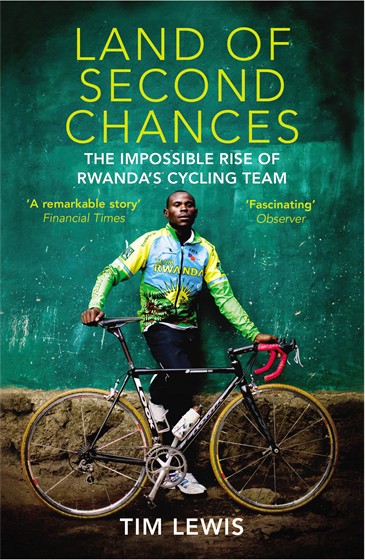
Land Of Second Chances- The Story of Team Rwanda


I picked this book up at Barnes And Noble a couple of days ago on a whim, and about 300 pages later, have just finished reading this book. So I will do my best to give a book review on it while everything is still fresh in my mind. 


This book was written in a documentary style which I believe will one day facilitate in making this story into a short documentary or Indie film. The premise of this story takes place in modern day Rwanda, twenty years after a genocidal war that killed hundreds of thousands of people in a matter of 100 days. Unlike most people who have never heard of Burundi or Rwanda, I am well studied on the subject and count Rwandans among a few of my personal friends that I have made over the years. Therefore this book prompted my immediate interest when I saw it sitting on the bookshelf at the store. The author does his best to describe the current state of affairs in the country, giving readers a glimpse of how much has changed since those tumultuous years in the 90's. The modern day Rwanda has gone from being a poorest war-torn country in the 90's to be one of the most stable regions in the African continent. There are still problems with economic disparity and infighting between classes, and the country as a whole uses a cash driven economy to pay for their day to day expenses. The author goes on to describe the Rwandan people as hard working but satisfied with having their basic necessities met. By the author's account, he presents Rwandans as defining success in being able to provide for their families modestly, without the need to make incredible sums of money or have fame in the process.

This book is mainly about one Rwandan in particular, Adrian Niyonshuti, who went above and beyond what his other teammates were able to achieve and what cultural and societal expectations others might have had of him. Given an introduction to cycling in Team Rwanda by Jonathan Boyer, a former professional cyclist turned philanthropist, he was able to make it into a Professional South African team and went on to compete in the London Olympic games. His other teammates rode their bikes until they felt they could cash in their earnings and live what was considered "making it" in Rwandan society; A house with concrete floors and running water and electricity, a cow and maybe a goat, and a wife and about five to six kids. Nothing more and nothing less. Every man has his price, in Rwanda this is what most of the population in poverty can only hope to achieve. With the average person living off a dollar a day, there are no ambitions for fame and fortune or any wanting of the commodities that are enjoyed in western society. 

This book crams the history of the genocide, Project Rwanda, Rwandan customs, politics and tribal and religious beliefs into one book in an attempt to explain the logic, thinking and obstacles behind developing a professional cycling team in Africa. Project Rwanda was started by Tom Ritchey in an attempt of empower Rwandan farmers in their coffee development. At around the turn of the millennium, coffee prices increased worldwide and Rwandans were not benefiting from it. Tom Ritchey invented a bicycle which allowed local farmers to transport their coffee beans to their destinations faster, improving the harvest time and overall quality of the coffee and giving Rwanda an advantage in the coffee market. Although interesting at times, the character development was overly extensive and I personally felt that the book veered off the subject many times due to all the additional facts that were added to the story. The book related a story from the third person and the first person of the actual author writing it rather than giving the reader actual firsthand accounts from the characters themselves. It was easy to get lost in the storyline, however the overall message of the book is what kept it captivating for me. I personally enjoyed it as a cultural education about Rwandan people and it has also helped answer personal questions that I have had about the absence of many Africans or third world peoples in the sport of cycling. As was suggested in the book, cycling could grow more popular in this part of the world if the sport wasn't institutionalized by American or European standards and if Africans were able to develop the sport in a uniquely African style. This book also helps me to appreciate that you don't need to have the $10,000.00 bikes and equipment that the pros have if you want to be a serious cyclist. These guys did it on second hand bicycles, many of them on an old steel Benotto or an Eddy Merckx that was handed down to them with weld repairs and non-functioning gears. 


The book suggests that the cutoff age for a cyclist in their peak is in their late 20's. However, I have to disagree. Evidence proves the contrary in athletes like Chris Horner and Jans Voigt, both in their 40's and still winning races. I for one am in my late 20's and feel like I haven't been riding a bike long enough to be at my peak yet. This was an interesting read, it wasn't the underdog story that I was hoping for, rather an objective narrative about Team Rwanda with lots of additional facts in between. This book is a good read for any cyclist, but the non-cyclist types may find it difficult to follow along. Retrospectively, this would have been a good E-book buy or even a Half Price Books find. These are my two cents about Land of Second Chances.Stay tuned for more reviews like these from my blog.


Saturday, February 15, 2014

Introducing Bike-boarding

Riding a bike to the skate park, Bike-boarding, I guess?

Is it skateboarding, bicycling, or Bike-boarding? Why shouldn't riding a bike to the public skate park, then ride to the local mountain bike trail and then riding home not be considered a multi-level sport, just like all of these biathlons, triathlons and decathlons people are always talking about? So there, I henceforth have invented a new multi-level event that I think I'll call Skate-bikethalon, or bike-boarding, for short.


I have only been to a real skate park a few times since taking up skateboarding as a teenager and I haven't been on my board in years. To say I am a bit rusty is putting it real gently. Nevertheless I had fun, got a good workout and even dropped in the bowl in the kiddie section a few times. Being the oldest guy there I probably got a lot of silent respect from the younger crowd, even if I was skateboarding with a bicycle helmet on.


After skateboarding for a little while I rode 11 miles out into the rural part of Mckinney near the city limits. There I met my friend Abdias at Erwin Park trail for 11 more miles of rigid, off road mountain biking. I was able to find the park by putting my cell phone on a phone mount attached to the handlebar of my bike and using Google navigation by bicycle to get there. I have to say for the most part Google has a great database on how to arrive at destinations by bicycle. 


Arriving at Erwin Park in Mckinney. 

Me, on the left. My friend Abdias on the right.


By the time we were done mountain biking the sun was beginning to set and a light breeze was blowing in from the southwest. Abdias let me ride his draft on the back of his car until we reached a less rural  and more open road. As hard as I tried I could not bring the skateboard back with me. The wind was pushing it like a sail and it nearly fell off of my saddlebag before I had to give it to Abdias for him to take home for awhile. As I rode home in the sunset I was taken aback by the red, fiery clouds that cut like ribbons in the sky against the green, freshly planted fields as I was heading back into the suburbs. It was a cool experience that gave me a chance to relive my youth a little bit and gave me a small weekend adventure to talk about. 


Was that a cool story, brah? Stay tuned for more cool stories like these and subscribe to my page for more insightful articles from a Bicycle's Point of View.

Tuesday, February 11, 2014

The Week's Forecast...And I'm Freezin!


What do you do when your'e a cyclist blogger and the weather has you indoors when you rather be outside riding your bike? Blog about the weather, of course! The weather for riding has not been great around here lately. A few days ago I took off on my bike for seven miles in the cold and light drizzle and felt as if I would have come down with pneumonia had I stayed out in the elements any longer. As I look at other blogs I realize that it's not just me wimping out at this colder than usual February for Texas. The temperatures forecasted for Wednesday onward are the temperatures we are used to having here during this time, 50 to 60's on average and as low as the 40's when a cold front blows through. Instead the temperatures have stayed in the 20's and 30's for almost two weeks now, and I can't wait for another day off and some respite from the cold to de-stress on my bicycle for a few miles.

When I get cabin fever I feel like I'm becoming the Hulk. Not only do I feel like I am gaining more girth in mass from being sedentary but my stress builds like a pressure cooker from the lack of physical activity. The only thing that hasn't happened to me is turning green after two weeks of this weather charade. I try to keep the big guy inside of me by riding on my trainer, learning guitar, drawing and catching up on a few novels still unread in my bookshelf. But as the days wear on the pneumonia inducing cold starts to seep into my optimism and good nature. It's really hard to be in any kind of cheerful mood and suddenly I start looking like the Hulk and acting like the Grinch. I get very touchy during this time, as if it were that special time of the month for me. But I will bite my lip and wait it out until Thursday for Friday, surely then I'll have some time off I can go outside and enjoy the 60 degree weather. 

Yep, this picture sums up the way I feel right about now.


Stay tuned for when the weather warms up. I'll be on my bike riding and writing about my adventures when it's safe to do so. Until then stay warm, catch up on a few books and subscribe to A Bicycle's Point Of View.

Friday, January 24, 2014

The New Digs, Some Bike Riding & Burr...It's Cold Outside!


After almost three weeks of moving, organizing and fixing my broken down car I can finally say I'm settled with my family at our new place. My wife and son and I have the upstairs living area with a nice balcony and and a wonderful view to the neighborhood, since the house is built on a hill top. My in-laws have the downstairs section and so far this house has proven to have enough  space for all of us to live comfortably. There are a couple of things that will make this move even more official, like finding a renter for my old house, which I am on the verge of doing.

It can be said that everything is within walking or bike riding distance from my house, from the parks to the grocery stores and restaurants. It is not practical to ride during all times of day here, though. I received a few honks once when riding my bicycle during rush hour, and I was riding on the designated bike paths. People in the neighborhood seem to roll their stop signs or not stop all together, something that worries me if I ever want to ride my bike at night. Having said all that this area has been great to ride on the weekends and during off hours and generally speaking drivers are pretty respectful here if they see cyclists on the roads.

I have already ridden my bike around most of the bike paths in my area and I am pretty impressed with how well made these paths are for recreational cyclists. These paths are pretty full of people on the weekends so it's pretty hard to go at a respectable speed with all the other joggers and children present. The paths here connect to other neighborhoods and parks. They could be used as part of a commuting route along with neighborhood roads to get to destinations within the city. Here's a couple of pictures I took on one of my rides through these trails recently.

With the Schwinn, Exploring the nearby trail system

Riding bikes to the park with the family
 

I have already ridden some respectable distances since moving here. A couple of weeks ago I rode the Woodrup from my house into the historic downtown center, meeting up with two random strangers as I continued north out into the countryside. They were both middle aged men riding on expensive Wilier bicycles. Despite that I was surprised by their lack of bike snobbery, one of the guys seemed especially nice and inclusive, inviting me to tag along. As we rode through hilly roads, many which were in disrepair in long stretches of road, I almost felt like I had an advantage on these guys with my road dampening steel bike. We stopped at this remote gas station and corner store out in the middle of nowhere. The nicer one of the two stepped inside the corner store and came out with a Dublin Dr. Pepper he bought for me, sweetened with real sugar rather than high fructose corn syrup. We finished the ride and parted ways as good acquaintances.

Pretty bad selfie here but here's the guys that I ran into the other day on my ride.


Random Corner store we stopped at during our ride. Check out the rigs these guys were riding!


The next week I tried riding this route by myself but got lost and added an additional 10 miles to my journey trying to find my way back home. The wind was gusting about 24 miles an hour so I felt great going out but was struggling severely on my way back. I was climbing hills about 8 miles an hour and was doing everything that I could not to come grinding to a halt and to make it back home. There was a cold wind chill factor as well as allergens in the air that resulted in me being sick for the next week afterwords.  Will I do it again? Yes, but it will definitely have to wait until it gets warmer.

Speaking of the weather, all I have to say is burr.... . I can't remember the last time I used the weather as an excuse to stay inside and not go riding, but this winter and especially the latest artic chill has sent a rush of cold air through the plains and yes, even down into Texas where I live. The weather here has been nothing like the weather the northerners have had, but it has at least been as cold as Chicago on a normal winter day. As I am sitting here typing this it is about 15 degrees outside. The high will be in the low 40's, and there is a chance of snow for next week as well. This isn't weather that we are used to down here in Texas, just like a lot of people are not used to our 115 degree summers.

This is what I have been up to lately since the move. Subscribed and stay tuned for more updates from A Bicycle's Point Of View.


Saturday, December 28, 2013

Aww Yeeaah! What A Beautiful Day to Ride a Bike!

Riding in the country on my 1988 Schwinn Le Tour


I don't photograph my rides as much as I should and I really need to start taking my cameras on my rides more. I have seen some breathtaking landscapes that a cell phone picture just can't justify, and in the future I will try to get into the habit of lugging around my real cameras again. This picture, however, did a good job of summing up today's bike ride through the countryside on my old 80's Schwinn Le Tour road bike, the latest edition to my stable of vintage bikes. Today the weather was awesome, 65 degrees and not a cloud in the sky. I rode about 17 miles out to the country and back from my house on this trusty old steel bike with toeclips. This isn't the fastest bike that I own by far, but it is one of the most comfortable bikes that I have. It handled descents that normally feel twitchy on my other bikes with stability and grace. It absorbed all the road imperfections and I didn't feel any soreness despite not riding with gloves or padded shorts today. I felt I got a great workout despite riding in my Vans tennis shoes, jeans, T-shirt and pullover sweater. I definitely did not look like a typical roadie.

I wasn't looking for another bike when this bike came along, In fact, this bike found me through a friend of mine trying to sell the bike that once belonged to her dad. All the bike needed was some new tires, shifter cables and bar wrap and she was ready to go. The chain and freewheel will probably need to be replaced in the near future, but for now I am content to ride it the way it is, despite it's minor imperfections. The squeaky freewheel and the extra weight actually give the bike some character.  I have already dragged my child stroller on it, and it is officially the go to bike for rides with the kid in tow. 

The Schwinn is now the trailer puller, commuter and general workhorse bike.


Pretty soon I will no longer be living near these nice country roads which have offered some captivating scenery over the past three years. From glowing sunrises and rays of light beaming through the trees in the early mornings, to golden and auburn autumns where the monotony of crimson reds and canary yellows is only broken by the deep blue sky and the lake nearby that mirrors it. From dogs chasing me as I ride along fields of wheat and old red barns, to diving into foggy descents on overcast and chilly mornings. These are some of the memories I will treasure from this place, and, who knows, I may come back just to ride out here again. I am more excited about where I will be riding in the future as it holds a good mix of urban cycling with the countryside not that far away. Hopefully the roads will be as hospitable as the ones I am used to riding and hopefully I will be riding more, exploring more. Stay tuned and subscribe for more posts from a Bicycle's Point Of View.

Wednesday, December 11, 2013

Is Steel Coming Back to the Peloton? Yes it is..yes it is

The Steel Renaissance is Finally Here! Well, sort of...


It appears someone's ears must have been hurting when I wrote my last few articles about steel bicycles. Apparently a few people in the bike industry finally had the common sense to make a bicycle that I actually want, let alone one that is practical when the tires roll off the smooth tarmac and out into the countryside. Condor and Genesis, companies both based in Britain, have introduced a line of pro-quality steel bicycles that have already made their way into this year's UCI cycling program. 

Picture courtesy of Genesis Bicycles


When watching the Tour Of Britain this year, I noticed what appeared to be steel bikes ridden by the Madison-Genesis team, a wild card team in the tour this year with a lot of young talent. Since my eyes did not believe what I was seeing I figured they were just carbon bicycles that looked like they were made of steel tubing. Months later I have recently discovered that this team was riding on their Reynolds 953 steel equipped flagship model, the Genesis Volare 953 Team. The Madison Genesis team did not win the Tour of Britain this year, however one of their riders did walk away with the jersey for most combative rider. The team has already had victories on this bike in a couple of under 23 events. Genesis has been innovative and forward thinking in designing a bike that can stand the rigors of the spring classics and the Belgian and French cobblestones. 

The Condor Super Acciaio.


Condor has also made strides in introducing their own competitive model, the Super Acciaio. Already ridden my the amateur team Rapha-Conor JLT, this bike is expected to be seen more next year in pro-tour events. 

Are these bikes affordable to the average person? No, these bikes still come at a premium price. However, compare them to a $10k carbon Trek or Specialized and the price of these bikes starts to look much more reasonable. Keep an eye out for these two bike manufacturers which are bringing back to cycling something it has long been missing and in need of, the feel of steel.


Thursday, December 5, 2013

Saying Goodbye to a few things for now, and new changes to come

Saying Goodbye to the Bike Shop, Relocating and Looking at Cycling...Differently


After six months of gainful employment, it is time to say goodbye to my job as a bike mechanic. With a move coming up and a few life's changes to follow, I feel like I have reached the end of the road as regards working at this particular bike shop. I can attribute this feeling to several things, but mainly due to the fact that I have reached a point where I am content just being the cyclist I am. I own all the bikes I would ever want or need and I have all my own tools to do maintenance on them when they break down. I have also reached a critical point where I have hit the glass ceiling at my current place of employment. Because of the push to be a retail shop more than an actual bicycle shop, I feel like I am wasting my potential and am not using  my skill sets as a mechanic to the fullest. I also feel that the shop where I am currently working pushes the carbon fiber, spandex clad roadie image to all of it's customers by not selling a good variety of mid range to upper end road bikes. Being that our bike shop caters to many first time consumers, many customers walk away on bicycles that don't suit them, only to return them a year later, causing the store a huge profit loss because their return policy is so lenient. 

To me the realization came as I was selling a customer on purchasing a bicycle he was interested in. Although he really liked the bicycle, I knew that because the way the bicycle was designed it would not give him the comfort that he was looking for. It was a bicycle that I myself would never own or ride, but since I was in the position that I had to sell him something, I tried to pitch the sale as best as I could but failed to sound genuine about it. That is when I stopped and asked myself "What am I doing here. working a part time gig at a bike shop, barely making back my gas money and toll fees to get here and then pretending like customers actually need bikes like these?"


Had the customer been me, I would have sold him on a steel touring bike with braze-ons for racks which is that this customer in reality really needed. Instead he was considering an unforgivably rigid carbon fiber road bike that was going to aggravate all of the back and wrist pains he was already complaining to me about. The problem is, my store doesn't sell steel road bikes. How am I supposed to steer someone to make the right purchasing decision for them if the bike shop doesn't even carry the bicycle that they need?


Once the job is no longer fun and there is no opportunity for advancement, financially or otherwise, it's really time to move on. That's where I am at.  I am ready for a new start, doing something different. I would love to continue to work as a bike mechanic, but I can't work somewhere where I can't make a living doing it. And to me I'm at a point where if that is the case I'm fine with that, in fact I prefer it that way. Business should be business and pleasure should be pleasure.


Coming up is a new move into a really nice, bike friendly community, and a chance at a new start there. Hopefully the move brings new friends and new experiences that I am looking forward to having with my in-laws in our soon to be shared residence. Hopefully the cost of living savings will allow us to put funds aside for traveling and having more bicycling experiences abroad. Hopefully I will have a rental property up and running soon which will bring in some income to compensate for my not working at a bike shop. There are a lot of new things going on in my life as of the moment, these are exciting times for me right now. Cycling is taking a smaller window in the whole scenario, I no longer feel it deserves the same level of importance to the point where I have to work at a bike shop, unless it's a professional shop with respectable pay. I need to start pedaling more slowly, letting my wife catch up as I pull along a child trailer and spend more time on the bike with my family. Either way, I'm too slow for pace-lining roadies and I am too fast for the Grant Petersen or Jan Heine touring types. I'm stuck somewhere in the middle, riding on what a lot of people consider ancient technology, ripping up and down country roads with no agenda, no training schedule in mind. Riding a bike because I feel like it, because it makes me happy. I ride a bike because I like the way my legs look when I wear shorts, because after every ride I have dumped my stress load on the side of the road, and my mind is focused. Few people will ever understand the commitment I have to riding and the relationship I have with my bicycle. I know few people that are as passionate about cycling as I am, even fewer among are my friends. As long as I am mobile, I believe cycling will always be a part of me. For now, I say goodbye to working in the industry, reading cycling magazines, and trying to keep up with the latest trends. I'm not going to write off working in the bicycle industry again and I already have some job leads that I am following up on. I am also saying goodbye to continuously buying, trading, reselling or restoring bicycles. I have a couple of restorations left that I haven't sold off yet, I will restore those and perhaps motorize a bicycle.  I really don't have the time to keep doing restorations as frequently as I used to. I honestly don't have very much more time for blogging. But never fear, my beloved readers, if I am not blogging about something on my computer, it's usually because I am enjoying myself in real life, so take comfort in that. My plan is from here on out to enjoy the bikes I already own, to make new adventures with my family, and to let my readers in on what I am doing, every once in a while. Keep subscribing to my posts, but keep the rubber side down in between my articles, as I will be doing the same.


Thursday, November 14, 2013

John's 1983 Schwinn Varsity Deluxe Refurbishment

My 1983 Schwinn Varsity Deluxe Project, putting
the bike up to date.


After and full overhaul and regreasing and replacing some parts, John now has a great little bicycle his daughter will enjoy.  Alot of parts were brought up to date and some parts were even replaced with parts I had extra from other Schwinn restorations I have done. Here's a couple of before and after photos.

 New brake pads and tires...


New cables


 New chain and and a re greased crankset


The bike now looks better and rides a lot better too. If you have a bicycle that is in need of repair, and live in the Dallas metro area, drop me an email and I will see what I can do. Thanks again for subscribing to A Bicycle's Point Of View.

Thursday, November 7, 2013

Atala on a Budget

My new Bicycle, My Atala Build

After having sold my Raleigh Sport road bike along with a few other bikes and things to clear out the garage and supplement some much needed income at the time, I started to miss having a bicycle that was fairly new ( meaning less than 10 years old). I wanted a bicycle where I could start anew, something upgradable and something in the steel variety.

I had a few parts lying around in the garage and saw no need to buy a whole new bike with all the components already on it.  So I went on eBay and purchased this new old stock Atala bicycle frame which I then built up myself.

By the way, I love eBay and I love PayPal. The bill the later feature allowed me to finance this frame over the course of six months, not bad to pay off a frame a little over $300.

The wheelset, brakes, saddle, stem, handlebars and headset were all items that I either had from other bikes or that were given to me on trades and other small parts purchases. On a previous post I said I would not be going back to brifters, but every man has his price. When a coworker offered to sell me his brifters, crankset and rear derailleur for $25 I went for it. I ended up replacing the crankset with an ISIS drive crankset from eBay due to bottom bracket compatibility issues. I could not get a JIS crankset to work with the Italian bottom bracket I already had, so I went full ISIS drive. The rear cassette had to be adapted with a spacer to work with the 7 speed shifting. I purchased the chain, tires, tubes, rim liner, handlebar wrap and shifter boss adapters from the bike shop were I work at. Nearly $200 in parts later, I now have a complete bicycle.

So how does it ride, $500 later? The bike is very smooth and pedaling and shifting is effortless. On my usual 20 mile, hilly ride I hardly had to get out of my 53 tooth font chainring, and felt like I could have done the whole ride on my large chainring. The shorter chain stays allowed me to pedal up hill with a higher gear ratio than I would normally do otherwise. Despite their reputation for failure, the Shimano RSX shifters shifted on a dime making the bike ride like a champ. 

But how does this bike compare, to say, My Woodrup? The Woodrup is definitely the nicer riding bicycle. The steel is more springy and I hardly feel the road under my feet. For a steel frame, the Atala is very stiff. Not jarring stiff, but noticeably stiffer than my Woodrup. The frame is made from Dedacciai Zero Tre tubing, so one would expect a really nice ride quality from this bike, Italian tubing and all. The ride quality is comparable to 4130 Cromoly steel. The frame was so stiff that I did a magnet test to see if it indeed was a steel frame. The bike feels solid, but the fork hardly has any give and doesn't shock absorb as well as my Woodrup. I'm glad I decided on using 700x25 tires on this bike, otherwise I would feel the road imperfections even more so.  This is my only beef with the bike, that I could have bought a used Reynolds 531 frame for the same price or even a complete Fuji Connoisseur bike, also with Reynolds tubing.

I plan to make this bike work for me. Even if I don't do anything more than ride around for recreation, it is a good bike to cross train on. I feel the frame supports by body well and that I can keep it around for a long time and come out even if I ever want to sell it. Soon I plan on commuting on my bicycle more and it will be a nice bike to have around for that purpose. I can ride the Atala hard on the weekdays and relegate the Woodrup as my Sunday bike.

I feel like overall I really got a good deal out of this bike. $500 isn't chump change, but there is nothing out there at the moment cycling wise that can compare at that price point. Hundreds more could have been spent if I didn't have all those parts to build up the bike with. Therefore, I still feel like I built this on a budget, since I only had to come up with $200 up front. $500 all at once would have put a real dent in my finances, so I'm glad I went this route, even though I had other alternatives to choose from. Hopefully this is the beginning of many new and happy memories on my Atala.

Check out some more pictures for eye candy and subscribe to get more informative posts from a Bicycle's Point of View.  

Shimano RSX 7 Speed drivetrain and Vuelta ISIS drive crankset


Cinelli Handlebars and Stem. Shimano RSX Brifters, probably from the 90's

I didn't compromise on the saddle, it's Brooks or nothing

Sunday, November 3, 2013

John's 1983 Schwinn Varsity Deluxe Restoration


I recently started a restoration project for a customer of mine named John. This bike will be a present for his little girl, who will soon be big enough to ride it. This restoration involves a good detailing and regreasing of all the parts, so it is more like refurbishing to like new condition than a full restoration that would involve repainting or re-decaling.


John's bike is unique in that it has 24 inch tires and a freewheeling crankset and a fixed freewheel. This bike is also equipped with Shimano Positron shifting,  which uses an indexed rear derailleur. The purpose of Shimano Positron was to be able to shift gears without pedaling. The idea was soon abandoned in 1984, when Shimano revolutionized the bike industry with indexed shifters.

This will be a nice little project and I will post updates on my progress. Here's a couple of pictures of what I have done so far.
Freewheeling crankset actually uses a freewheel inside the crankset rather than on the rear wheel of the bike.
24 inch tires were common with youth's lightweight bikes of the 70's and 80's

Shimano Positron shifting came with a solid shifting cable and an indexed rear derailleur.


Repacking: Crankset and bearings are removed and ready to be degreased

Crankset and hardware before degreasing

Degreasing using Simple Green solution, an all natural degreaser that is free of harmful chemicals


I use chrome polish on all chrome parts to clean out the grime and surface rust on the bike.
  
Some more notes on this restoration: by 1983 Schwinn had apparently abandoned the S-5 rim as the Schwinn 547 rim diameter tires that I purchased for this wheel did not fit well on the rim and popped off. I will have to reorder some standard 24 inch tires with the 540 rim diameter, similar to what some wheelchairs use. This is an important observation as I could not find any information online about this previously.

Thanks to Hugh's Bike Blog about the tip for using chrome polish to clean and restore chrome finishes. Stay tuned and subscribe for more posts from a bicycle's point of view.

Wednesday, October 2, 2013

Why I will never go back to brifters

My Move away from Brifters, and why I won't be coming back to them.


At first glance, this title might sound retro-grouchy, even draconian towards the use of new technology. I might make readers assume that I refuse to see the benefits and performance gains that new components, such as brifters are offering cyclists. In part, that is true, and I won't deny my personal preference on the matter. However, I have found that after almost a year of riding a bike without brifters, or integrated shifters and brakes, I am now ready to leave them behind altogether. I have seen my riding technique improve dramatically since riding my new-old Woodrup steel bike, this summer attaining an average speed of 18 miles an hour, something I haven't done in a really long time since previous years past.


Riding in a modern day group ride or a criterium race, and you will constantly hear the clicking of gears, even going up or down the slightest elevation change. The ever increasing number of speeds on a rear cassette means riders really don't know what to set their gear ratios to. Riding with downtube shifters has made me realize how much of a handicap brifters are in covering up errors in one's riding and shifting technique. There are several component changes that have come up in recent years, such as the compact crankset, where riders don't even have to shift to the small chainring when climbing with the gear range they have on their rear cassettes. Most cyclists here in my area will not shift to the lower chainring for climbing, and I find that many of them churning their pedals slowly up hills, standing off of their saddles as they ungracefully climb to the tops of them. 

Prior to this year I was one of those cyclists that could sprint well but could be overtaken over a long distance by others who knew how to conserve their energy. Cycling is all about energy conservation and efficiency, and how to outperform other cyclists while using less effort. Through owning a bike with downtube shifters my pedal stroke while climbing has improved, I am able to pedal smoothly and efficiently up hills while passing other struggling cyclists, and my times have improved by almost two miles an hour. By not falling back on a wide range rear cassette ( I am currently riding a 7 speed 12-21 freewheel) and not having brifters, I have learned how to push through harder gears that I would have normally shifted down from, as well as to use my smaller chainring while climbing and calculating the terrain changes and adjusting my gear ratios accordingly.

I would compare the learning experience of riding a bike with downtube shifters with my experience in photography. My first photography class was a black and white photography class where we used traditional film cameras and developed our own prints. If it weren't for that class, I would have never developed an interest in photography. Just like a traditional photography class taught me the principles of lighting, shutter speed and lens aperture, the traditional downtube shifter bicycle has taught me the principles of shifting on a bike. It makes me want to ride my bike all the more, at a time when my interest in cycling in general waned a little bit, because of no longer having aspirations to do any serious racing (you can thank the Lance Armstrong culture for that). I might show up to a few races in the future, but it will be on my retro bike with downtubes. I will still try to place if I race again, though I am not realistically expecting to do so. So the serious intent isn't there anymore. Neither is the obsession with carbon fiber groupsets or $10,000.00 bikes.

By the way, did I mention that riding a bike with downtube shifters is way more fun than riding one with brifters? Learning how to coordinate a shift with one hand on the handlebar and another one on the shifter will be a challenge at first, but then it becomes one fluid, natural movement. Since downtube shifters are less accessible than brifters, the need to shift will be less and the rider will learn the gear that they will need to be in before they shift. 

I am now selling the very first road bike that I purchased new, my 2007 Raleigh Sport road bike with brifters. Anyone living in the Dallas metro area is welcome to it for 250 bucks.  Any takers?


Editor's note: Since I wrote this article, I acquired a lovely, new-old-stock steel Atala frame and equipped it with a pair of Shimano RSX brifters a co-worker sold to me for 25 bucks. Being the most economical option at the time to use brifters instead of downtube shifters, the brifters have stayed on the bike and I now once again have a bike with brifters, only that it is steel and that it is my size as well. Whatever you ride, love it because you use it, not because it cost you a lot of money.

Sunday, September 22, 2013

Fall Is Here!


Picture courtesy of Bike 198 www.bike198.com


Finally, fall has arrived to this arid part of the world. This morning I was able to put on a light sweater and get a ride in before work today! It was a beautiful day to ride my 18 mile route across the countryside. I averaged slower than normal, however I was also taking in the breeze of the cool morning. For the next three and a half months, we will have some great weather for cycling here in Texas. More posts to follow, now get on your bikes and ride!

Friday, September 13, 2013

How To Make It In Fort Worth

Ft.Worth, the "other" city across Dallas-and what you need to do to live there.


Fort Worth really is a beautiful city. It's not a fake kind of beauty that you can guise behind a fancy bridge with white arches or a pretty city skyline. It has never been a problem for me to walk the streets of Fort Worth at night. I know that I am safe and I feel safe as well. Fort Worth has an impressive arts district, parks, museums and miles of bike trails. In short, Fort Worth gets me, and then again it doesn't. Once a resident among it's city limits, I had to abandon this city 7 years ago to get a job, find a wife, and ultimately move forward in life which I wasn't able to do in Fort Worth, as hard as I tried.

I must have handed out about 100 or more resumes in my early 20's. I was an educated, energetic and hard working young man ready to do whatever anyone asked of me (I still am, by the way ;) ). I don't know why so many companies in Fort Worth turned me down. I still believe that there is an unspoken social (maybe even ethnic) bias in Fort Worth that makes it's way into the workforce. There was no reason for employers not to give me a chance. Retrospectively, I knew others who were able to find success and were able to stay within the confines of Fort Worth's city limits. Here's how they did it, and how you too might make it in Fort Worth.

Go To School

This isn't a guarantee for employment, but having a college degree will improve your chances at finding a job that can pay the bills there. Look for opportunities in heath care, paralegal assistance, information technology, graphic design and computer aided drafting. Baylor is a major employer of many health care professionals in Fort Worth, and health care jobs are always in demand. To live comfortably, try to acquire at least an associates level degree if considering making the move to Fort. Worth.

Be Your Own Boss

Tradesmen seem to have it pretty good in Fort Worth from what I have personally witnessed. Some successful friends of mine were able to make ends meet by becoming landscapers, carpenters, carpet cleaners and installers, door installers, and home re modelers. There is no shame in hard work, if you want to live in Fort Worth, that is.

Work at the Airport

If you don't have an two year college education, and no trade skills to speak of, the next step to making it in Fort Worth is to work at the airports nearby. Alliance airport is home to two major courier companies and DFW airport has several air freight and logistics warehouses. Keep in mind that working at an airport is hard work, requires working crazy shifts and it does not pay a lot of money. Jobs at the airport start around nine dollars an hour, and can pay up to fifteen in some companies. Paired with a second job or someone else splitting the bills, it might be possible to get by on an airport salary. I wouldn't do it long term, especially with a family in tow.

Work Outside of Fort Worth

Dallas has more work opportunities and more industries to choose from. Even the retail jobs pay better in Dallas. A fry cook at In And Out Burger starts making $10.50 an hour, which is unheard of in Fort Worth last I checked. I work at a bike shop and it's enough to supplement our family income for the time being. Companies are fair about the hiring process, and will at least call you in for an interview, even if your skill sets aren't top notch. My first legitimate job in Dallas was in Technical Support, where I learned on the job many of the computer and software skills I have today. I was also  given the opportunity to work in the health care field for two years as a monitor technician. 

Living in Fort Worth with a job in Dallas will be a challenge. The commute from city to city is about an hour each way. Traffic construction between cities is the worst I have seen in over 20 years of living in this area. Because of the nightmare traffic, many people who live in Fort Worth will eventually move to Dallas to save on gas and to reduce their stress levels. With a comparable cost of living between the two cities, it's no surprise that Dallas continues to keep getting transplants from Fort. Worth, myself included.

In conclusion, I miss the idea of Fort Worth. I miss being close to a city where I didn't have to leave town to get to where I wanted to go. I miss having everything I enjoy in one zip code. I miss a being in a city that is walkable at any hour of the day. Unfortunately, through no fault of my own, Fort Worth lost this citizen who did everything possible to make an honest living within it's boarders. No matter what I did to stay, it just wasn't good enough. I wasn't part of the social clique that makes up the Fort Worth elite. In Dallas, however, I found the value I knew I always had, as an individual and as a contributor to the community. That doesn't mean that it is impossible to live in Fort Worth, and it doesn't mean that I might not one day try to live there again, however things have to change. Fort Worth needs to find a way to hold on to the companies headquartered there. They also need to welcome more entrepreneurs and small businesses into their downtown area. Allowing artisans and musicians to perform in the streets on saturday nights was generating a lot of business, they need to start doing that again. With more economic diversity and transparent hiring practices, Fort Worth can be everything that Dallas is not. However, there needs to be a way to put food on the table that is accessible to everyone. Without that, Fort Worth will never outgrow or outclass Dallas, and will continue struggling economically and keep losing more residents each year. Betsy Price, if you're reading this, I hope you're taking notes.


Wednesday, September 4, 2013

Where did all the time go?

Finding time for bike riding is not as easy as it used to be.

It's 1:40am and I just finished replacing a brake cable on my rigid 26er mountain bike. It seems that my days are always ending real late and the only time that I can find to ride or work on my bicycles is at really odd hours, either at the crack of dawn or late into the night. Only a few years ago I was riding 3 times a week, 30 miles at a time on a regular basis. Now it's a  struggle to fit 18 mile rides twice a week into my schedule. 

Where does all the time go? Between my part time job, raising a kid and my other obligations, bike riding is seeing a real slim piece of the pie nowadays. With fall approaching, daylight hours are also being reduced, so I will have to ride at night if I want to ride during the week. Not a problem, other that this will mean driving 25 minutes to my in law's house so they can babysit my kid. My 3 year old is still too little to go with me on really long rides, and my car will not hold all my riding gear as well as his. 

I'm also getting to a point where I just want to ride for fitness, and realize that I am light years away from being in any competitive form. With the little time that I can dedicate to cycling, it will probably stay that way until my son starts school. In the meantime, I have to be there for my kid and not be an absentee cycling father who's always on his bike. A part of me wants to be self-centered, then I realize how narcissistic and big headed that is.

I love cycling, I wish I could do it all the time and be in great shape. I probably would be in great shape if I rode my bike everyday. However I also believe in priorities, and until that day comes when I can get an eight hour a day break to be a competitive cyclist I am just going to have to keep fitting cycling into the open gaps in my schedule.