Showing posts with label vintage bikes. Show all posts

Wednesday, October 4, 2017

Vintage Mountain Bike Racing

Tales of the rigid mountain bike
The vintage mountain bike race

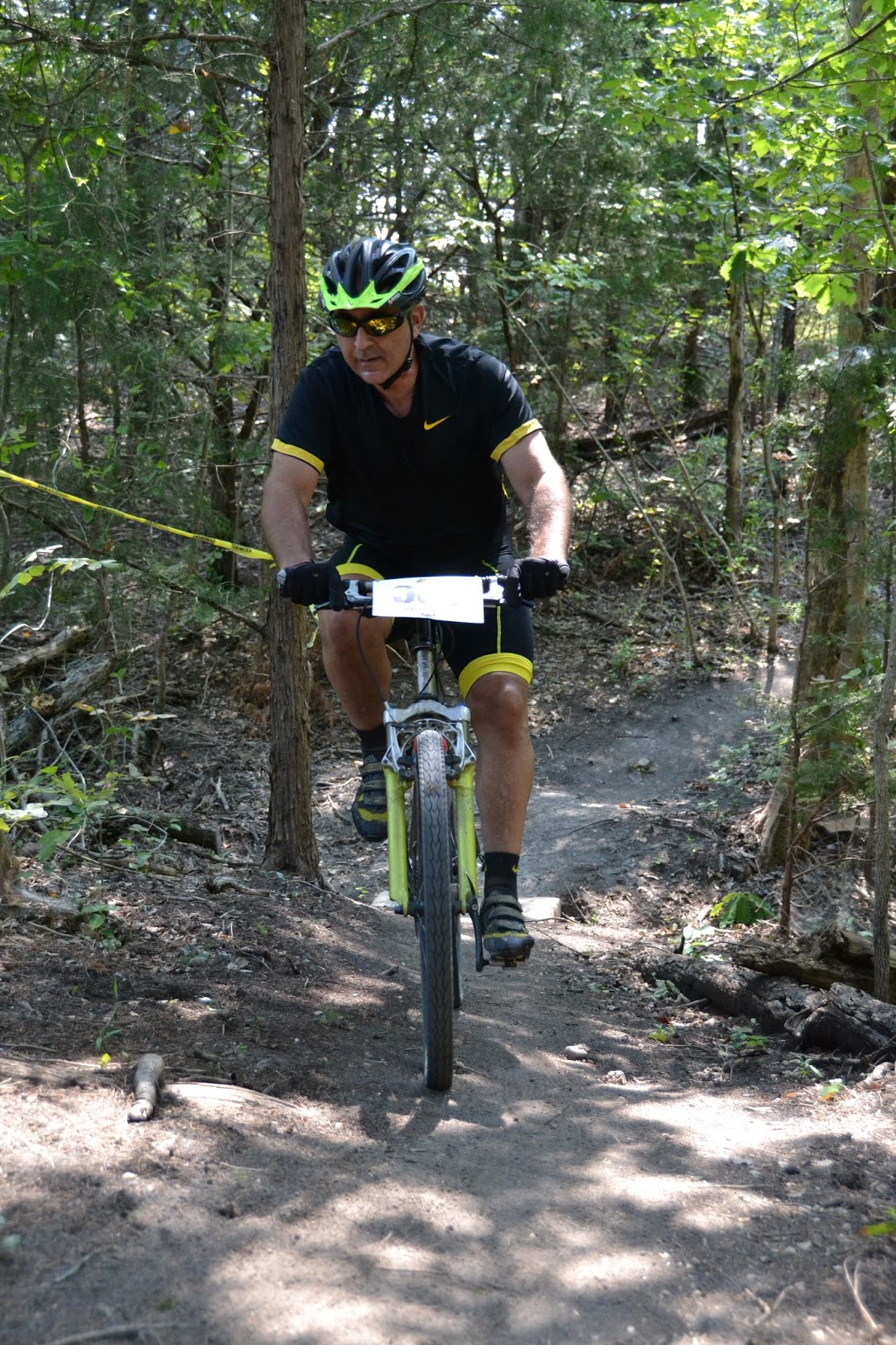
Vintage Mountain Bike Race on my 1990 GT Karakoram

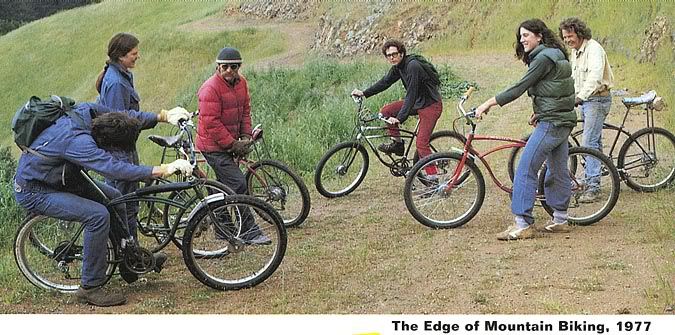
Mountain bikes have been around since the late 70's and mass produced since the mid 80's. Therefore, it's fair to say that some of those early mountain bikes can now be considered classics. Lately, people are reminiscing about all things 90's. Even mom jeans tried to make a short lived comeback. What's next, acid washed jeans, neon and the like? One cool trend that I have been noticing, at least in the world of mountain biking, is an appreciation for old school mountain bikes, like the ones I grew up riding as a kid.


It was probably 1997 or 1998 when I first got my Huffy rigid mountain bike, with grip shifters and cheap brakes that imitated a much earlier but more functional U-brake design. It was about 98' or 99' when that bike hit dirt for the first time at a flat trail then known to the locals as California Crossing. By then, good suspension systems were just being developed and we dreamed about doing the things that we can do today on our modern suspension 29ers. We lacked the skill and the equipment to be good at mountain biking, but the motivation was definitely there. 


Mountain biking was on experimental territory back then and so were mountain bikers. It wasn't unusual to see people riding in cut off jeans, flannel shirts and gardening gloves. Lycra as common as it now is wasn't the norm back in those days. Sure, some people wore Lycra in mountain bike racing. Most people however didn't buy their clothes from a bike shop and wore whatever exercise clothing they could find or make themselves. That's right, even exercise clothing had to some extent, be made because no one really wore exercise specific clothing aside from Richard Simmons and a bunch of suburban Mom's doing aerobic workout routines in front of a TV.   


A few weeks ago, I had the chance to relive that old 90's feeling to a certain extent. The local mountain bike racing association decided to host an exibition vintage mountain bike race, only accepting bikes that were made before 1999 with no modern modifications. I had found this 1990 GT Karakoram on Craigslist that I'm sure I only paid 20 bucks for. The bike needed to be stripped down to the frame, cleaned, re-greased and needed a couple of new parts. All in all I think I added around $100 to that original $20 purchase price. I lined up against guys with some pretty iconic 90's bikes that where real contenders in their day. The winner of the race had a Schwinn Homegrown with a Rockshox SID fork and lightweight Mavic Crossmax wheels. The guy with the Schwinn posted a lap time that could have easily put him in a top ten position in the regular races. The guy in second place had a titanium Merlin mountain bike that probably weighed nothing, as he ended up modifying it with carbon cranks ( I seriously don't know how he didn't get DQ'ed from a 90's themed mountain bike race).  I came in fourth, with my friend Nathan taking third on his 90's Ironhorse with Rockshox Quadra forks that he engineered to turn them into rigid forks. There were other cool bikes that were way lighter and more responsive than mine, so 4th place out of 11th was a good ride for me. I received a cool participation award for most vintage bike, and a lot of kudos from other riders for having the guts to show up and narrowly miss the podium on a nearly 30 year old, rigid bike with a front shifter that dropped the chain. I did, in fact have a mechanical which caused me to fall 3 places back and I had to overtake 3 guys to get back in 4th position.

Here's a couple of more pictures of the vintage mountain bike race...

Nathan on his Ironhorse with modified shocks.


The only other rider who had a bike older than mine


I hope to see more races like these as time goes on. I appreciate the nod DORBA gave to us former 90's kids and mountain bikers. In a world that is ever more serious and focused on tech, nutrition and other nuances, it's nice to get back to our lighthearted roots and more innocent times. I will still continue to ride my modern mountain bikes because I'm not a curmudgeon or a retro grouch. I will nevertheless look forward to the next event like this and hopefully this one won't be the last!

Possibly to come on my blog; I will try if time allows to showcase some of my recent vintage mountain bike findings, write more point of view articles and try to revive this blog a little bit. My goal is to go from a roadie to a mountain biker and come full circle with myself. Let's see if changing the format up a little bit will bring life into a bike blog that is nearly a decade old.


Sunday, October 12, 2014

Condition is Everything

When it comes to old bicycles, condition is everything


Why am I posting this? Because over the years, I have bought many old bicycles. I overpaid for some bicycles based on their brand name and country of origin. In addition to the price I paid for some of my bicycles, I spent to have them restored, in some instances twice as much as I paid originally. While some restorations have been worth it, others left me with a mediocre and somewhat decent bike at best. That is why when deciding on buying a bicycle, it's a good idea to look at the overall condition of the bike before making a decision.

Case and point, I recently got a late 70's to early 80's(ish) Concord Selecta Freedom Deluxe 12 speed road bike on trade. At the time of production, this was a mid-range bicycle made with Kuwahara tubing instead of the plain gauge, hi tensile steel so commonly found in bikes of that same era. This bike features a really cool, super smooth crankset that is a combination of the press fit and Octalink drive technologies seen today on modern bicycles. This crank also features self-extracting crank bolts which unscrew with a 6mm allen key, no special crank puller tool required. The Shimano Selecta crankset appeared around the same time as positron shifting, which was the first attempt at indexed shifting.

My Concord Selecta "Freedom Deluxe" 12 speed road bike.

The decals on this bike are painted, and the lugs have been ornately pinstriped.

The decals on this bike are in great shape. 


At first glance, there seems to be nothing special about this bicycle. It has a bolted on rear wheel, bolted on saddle, stem shifters, no rear derailleur hanger and no water bottle braze ons. The bike snob "connoisseur" types would quickly pass on this bike, assuming it is a cheap, low end model. What this bike doesn't show on the outside it reveals as soon as I mount on the saddle. 

This is the smoothest, most compliant bike of all my ten speed bike-boom era bicycles. The foam grips and the alloy wheels give it a comfortable and plush ride, and the steel frame does it's job of absorbing the road vibrations. The stem shifters shift effortlessly and I have just the right amount of climbing and sprinting gear ratios. What a climber this bike is! Seriously, I did not have to get off the saddle at all, not even on the steepest climbs of my routes the last time I rode it. The stamped, Selecta crankset spun smoothly up hills and I found myself spinning where I would normally be mashing. The saddle was firm enough but not super stiff in the crotch area, and the steel frame absorbed a lot of the impact to the groin region. Japanese road bikes of the 70's and 80's have a reputation for being well made and having better quality than the Peugeots and Merciers that were being made during the same period. However, the thing that sets this bike apart from my other bikes was the condition that I received it in.

This bike was received in time capsule, almost air-sealed, new-old-stock condition compared to other vintage bicycles that I have restored over the years. This bicycle needs no restoration, therefore there is nothing I have to put into it after making the initial investment. When I say nothing, not even the tires need replacing. The rubber on the tires is still new with the little stubbies sticking out the sides. Sometimes its better to get a lightly used, mass produced Japanese bicycle that is in good condition rather than buying a high end bicycle parts project. A middle of the road, not so prestigious bicycle in good condition will be ridden more, enjoyed more and it will be easier to keep up with in the future. A high end bicycle will be stored and collected after restoration, hardly getting any ride time over fears that if it breaks down it will be expensive to fix. These days, the better the condition and the better the fit, the more valuable a bicycle is to me. The Concord Selecta wins on both counts. I get freedom from riding it, just as the name on the frame suggests. It's a bicycle I can use to go exploring downtown or the trails around my area. I feel comfortable riding it helmet-less and in my regular clothing. A 20 mile ride on this bike wouldn't be out of the question, because I know that I received it in good cosmetic and mechanical condition. So I can't stress this enough. I have paid way too much in the past for bicycles that I never got running off the ground. So condition is everything...CONDITION-CONDITION-CONDITION!!!

Stay tuned and subscribe for more informative posts.

***Here's a checklist to go over when looking over a bicycle for purchase***


  1. Does the frame have cracks, dents, rust or feel off balance when ridden?
  2. Does the fork on the frame look bent?
  3. Does the chain have rust?
  4. Are the tires dry-rotted?
  5. Are there any missing bolts on the bicycle?
  6. Are the cables worn or rusted?
  7. Are the brake pads worn?
  8. Is there any rust pitting on the chrome components?
  9. Are the wheels severely bent or missing spokes?
  10. Does the freewheel or the rear cassette engage when pedaled?


Sunday, September 28, 2014

Vintage Mountain Bike: My 1984 Schwinn Sierra

Rockin' those bull moose handlebars....80's style.

I rarely take self portraits, but this one seems very period correct, Star Wars tee shirt and all.
As a followup to my last few articles about vintage mountain biking, I wanted to introduce some of my readers to what a first generation mountain bike looks like. I recently acquired this 1984 Schwinn Sierra for 70 bucks a few days ago. This was the first mountain bike made by Schwinn and 1984 was the first year of production. This model was a mid-level option at the time, with the High Sierra being the top of the line mountain bike in the lineup.

My first impression of this bike is how indestructible it feels while riding. This bike comes with really beefy Araya 26x1.75 alloy wheels with high flange sealed hubs that are bolted onto the frame. The wheels alone probably have a combined weight of  over 10 pounds, including the tires and tubes. Although this was a bit of a drawback while climbing, I feel that these wheels can rollover and mow down anything in their path. I don't think there is anything that I can do to easily taco these rims. 

This bicycle features the highly coveted bull moose handlebars. Bull moose handlebars have a unique design that combines the stem and handlebars into a single welded piece. Adding to the uniqueness of this design, this bike comes with old school friction thumb shifters as well. 

"Bull Moose" handlebars and thumb shifters, also known as "thumbies".
The brakes on this bike are truly unique. They are not the disc brakes seen on mountain bikes today or even the V-brakes seen on most 90's mid-school mountain bikes. These are first generation cantilevers, made of all steel with a winged shaped design.When adjusted, these brakes have incredibly good stopping power, although the front brake pads on this bike are starting to squeak and show their age.

Dia Compe cantilever brakes were one of the first braking systems used on mountain bikes.
When I got this bike, it was covered in silt over years of not being cleaned or maintained. The grease was 30 years old and never changed out throughout it's existence. I took this bike apart, regreased all the bearings and dunked most of the drivetrain parts in Simple Green to get the years of dirt and grime buildup off of them. I re-lubricated the chain as a temporary solution but will end up replacing the chain and freewheel in the future to make it ride just a little smoother. 


So, how does it ride? Let me start off by saying that this bike isn't for everyone. Its an old bike, there should be no illusions of it riding like a modern mountain bike or better. For one thing, climbing hills on this bike is more difficult because of the bigger front chainrings, the longer wheelbase and the overall weight of this steel bike. I made all of the hills I normally make on this bike, but found myself climbing on my largest rear sprocket most of the time. Granted, I had a backpack full of my camera gear when I took these photos on my last ride.  What this bike lacks going uphill it makes up for on the way back down.  This bike rides like a beast on flat singletrack and  takes downhills with speed. Its important to keep in mind that people were not thinking of riding their bikes over rock gardens or getting massive air off of jumps when these bikes were made. In the early years of mountain biking there was a big focus on trekking rather than racing like there is nowadays. Having a durable bike that could take a beating was key, but people also had the common sense to get off their bikes when the terrain became too gnarly. The mountain bike was originally designed to take people where a road bike couldn't go. In it's humble beginnings, it was purposed as a tool for exploration rather than an off road racing machine. Although this bike is heavy, there is no compromise to it's durability and this mountain bike rides like a tank. These are how the first mountain bikes that rolled off the assembly line were built.


This bike marks the start of a new focus for my blog, as well as a shift in the type of bikes that I will be collecting, riding on and talking about. I'll still do a couple of articles on vintage road bike riding, however the preservation of old-school mountain biking culture has taken precedent. One might assume that I'll be going off on a tangent of all things 90's mountain bike related, like talking about John Tomac's drop bar riding position or Tinker Juarez. Not at all; I'll be talking about mountain bike culture from the way I grew up seeing it, not from a nostalgic ex-racer's point of view. Some very interesting articles to come. Stay tuned!

Saturday, September 27, 2014

Vintage Bikes of the future, 26 inch wheel mountain bikes?

Why you should start collecting 80's and 90's mountain bikes


They say 30 years makes a classic. So pretty much, judging by my time here on this earth, I'm pretty much a classic myself. Classics enjoy the respect of enthusiasts and turn heads when being showed off in a modern environment. The mountain bike as it originally was has also become a classic. 

Crested Butte, 1980. There was a repack mountain bike race that day-viewed the first generation of mountain bikes, a far cry from what we would consider to be a mountain bike today. Cantilever or drum brakes, bull moose bmx-style handlebars, and heavy frames with long rear triangles were on the forefront of technology back then. Many of these bikes have sadly not made it into collector's hands after decades of rigorous thrashings on the mountain bike trail. The ones that have made it will soon be as valuable as the most expensive vintage Italian road bikes.


With the recent popularity of vintage road bikes and fixies, old ten speeds have enjoyed a vast number of avenues for replacement parts and upgrades. Most tire manufacturers still make 27" tires, for example. 27" and 700c wheel replacements are still to be found for many of these bikes, even replacements for rear wheels that require a freewheel instead of a cassette. In fact, ever since 700c became the popular wheel size on road bikes, they have been able to co-exist with 27" bikes until this day. I'm guessing back then bicycle companies respected the consumer's wallet, that or 27" wheel touring bikes were seen as benign and not a threat to 700c wheel racing bikes. 

Never in all of bicycle history has there been an attempt so blatant to eradicate a wheel size option than what the bicycle industry is doing with regards to the 26 inch mountain bike. A year ago, I wrote an article saying this would happen, based on market trends and feedback from working at a bike shop. It seems that overnight, all of the good, mid-school wheels and components have either been bought up or priced up at a 300% inflation rate. This is an unexpected outcome to the 650b and 29er wheel craze of the last few years. I can't seem to find anyone who sells good 26" freewheel threaded wheels anymore, unless they are heavy bolt ons for cruisers. The only wheelsets I find available are cassette compatible and top end brands like Mavic. What ever happened to the Zac 19's?

I can only compare what is happening to the 26", unsuspended, steel mountain bike to what happened to film photography. All the powers that be in the photography industry got together , and in less than a decade, film photography was gone. I saw my first digital camera around 2001, a box-like object that used a floppy disc and could only take five pictures at a time. By 2004, 3 mega pixel cameras where starting to become common among most people. In 2009 when I took my film camera to Germany, I received a few impressed looks and one person even told me that they had forgotten what a film rewind sounded like. I had to take my film to a specialty camera store to get it developed, and that was 5 years ago. I still have my film cameras (good ones, at that) but seldom use them because I don't know where I'll develop the little film that I have left in my refrigerator. Were film cameras that much more inferior than digital cameras? No, in fact a 35mm camera with a really sharp lens could get the equivalent of 64 mega pixels in image resolution. My medium format camera could get an even much higher resolution still. So why did the industry have to force film into obsolescence?

For the same reason why the bike industry is forcing out the 26" wheeled mountain bike: to make money. By forcing everyone to upgrade across the board, the bicycle industry is forcing consumers to buy their product, because all other options have been eliminated. As much as I loved my film camera, once all of the one hour photo labs started closing down, I really could not use it anymore. So let's say I were to break a wheel or a 7 speed shifter on my mountain bike. There may soon come a time where that will mean the end of that bike's lifespan as a mountain bike. It will from that point forward have to become a beach cruiser, because those will be the only wheel and tire options that will come in 26 inches. As a desperate measure, I may just have to buy a Wally World bike or a Magna bike from Target with 26 inch wheels, just to swap parts onto my old mountain bike. 

As consumers, we can choose with our wallets whether or not we like what the bicycle industry is doing. When I say bicycle industry, I am not including bicycles found at department stores, many of which still come in 26 inches. I'm including The two big American owned companies in the industry and the one big but still emerging Taiwanese "giant" who are driving the change. "The Big Three" currently own most of the patents in the industry and are known to buy out other companies just for the sake of eliminating the competition. If we don't like what they're doing, then we don't need to buy their mountain bikes, it's that simple. When we start seeing more aftermarket parts available for our old-school rigs, then we can entertain the idea of buying their products again. 

In conclusion, forced obsolescence is never a good thing. Look what that did to letter writing, no one writes hand written letters anymore. Fewer people read the printed page, now you see people reading on their tablets and "eBooks". People don't invite other people over to look at their photo albums anymore, everything is shared online and invitations are kept to a minimum. When something becomes obsolete, our values and manners suffer. Some people will say that it's just a wheel size, that it's just a hobby and that truth be told all bikes were meant to be disposable anyway. But it's much more personal than that. Pricing out the consumer or forcing an expensive change on them is taking advantage of their long time integrity and the fact that they're cyclists. It's telling them that there's a cost of entry and a economical barrier to doing what they love to do. It's telling the consumer either pay up or quit riding a bike. It's an underhanded and indirect way of pre-qualifying people to do something that everyone should have the right to do; ride a bike. Straight up class warfare, if you ask me. 

Here's my answer to what the bicycle industry is doing. I'm going to start collecting vintage mountain bikes and components. I hope to accumulate enough parts to do my own maintenance without ever having to step foot in a boutique, hipster-owned bike shop. Once I can no longer do maintenance on my bikes, all future mountain bikes will come from Target. That's how I'm going to choose with my wallet and I'm sure others will follow suit. The modern bike boom is over, it's been over for about 3 years now. With this forced change the specialty bicycle market will not keep enjoying it's temporary run of sales for very long. Once the bicycle demands of the upper echelon of society are met, they will not derive any more profit from the rest of us. Until another Lance Armstrong comes along and gets people into Tour De France fever, most people will no longer see the need to buy an expensive bicycle again. 

End of rant.


Tuesday, September 16, 2014

Rules of Old School Mountain Biking

Top 20 Rules of Old School Mountain Biking


If you grew up in the 90's or were already into the mountain bike scene back then, then this article will make sense to you. Long before consumers were priced out by carbon fiber, metric wheel sizes, electronic shifting and "E-bikes", there was mountain biking. Real mountain biking. The kind of mountain biking that required skill and a little bit of recklessness. Back then there were no cycling computers, no phone apps to track Strava or even cell phones for that matter. The most travel available on a suspension fork was 80mm, not 120mm or more like today's bikes. If you are a 90's survivor, or riding a 90's survivor mountain bike, here are the top 20 rules of old school mountain biking you will need to be aware of. Welcome to the club.

1. Trail etiquette is becoming rarer than 4130 Chro-Mo and neon fade color patterns. Respect others on the trail and assist any fallen rider.

2.Always lift the front wheel to clear obstacles on the trail. A steel fork is a beautiful thing to waste.

3. Suspension? Your body is the suspension. Form your body into a spring by bending your arms and your knees.

4. E-bikes are not mountain bikes. They're off road mopeds. Now repeat this line ten times in your head before moving on, until it becomes natural.

5. If the jump is too high, or the climb is too steep, a real man walks it. 

6. It's okay to wear blue jeans and flannel on your mountain bike. 

7. Goos, pre-workout drinks and legal steroids are for wusses. Do you get hungry on the trail? Eat some trail mix, a Powerbar, or a banana. Real food, you wussy!

8. Upgraditis is not a condition we suffer from. Don't fix it if it ain't broken. If it is broken, buy it New-Old-Stock off of eBay.

9. Always shift your weight behind the saddle when bombing a descent or flying off a ledge. Use the rear brake, only feather the front one.

10. You only need seven gears to shift on your rear wheel. A real old-school pro does it with six.

11. If you ride with thumb shifters, that's boss.

12. V-brakes earn you respect on the trail. Cantilevers earn you instant free beers, facial hair and overall success in life.

13. Never make fun of the hippie old guy that looks like ZZ Top and rides a Walmart bike while smoking a cigar in his cutoff blue jeans and tie dye tee shirt. That guy can smoke you on the trail and drop you like a bad habit.

14. Not sure which wheel size to get? There is only one, and it comes in 26 inches. Now pick a size, any one you like, as long as its 26.

15. Yetis are real. So are Klein bikes. But seriously......they're out there.

16. If gram counting is your occupation, I'm sorry, someone didn't love you enough. Give that man a sandwich and a heavy steel bike, pronto!

17. A scar tells a story better than Strava does.

18. Never, under any circumstances, is it okay to show up to a trail with your legs shaved (unless you're a woman, then feel free to do your thang).

19. The bike should always cost less than the car, even if the car cost $800.

20. Clip-less shoes are for roadies that ride mountain bikes. Platform pedals and hiking shoes are all you need.


These are rules for the off-road retro grouch to live by. Its time to take back what was once ours from the roadies who got bored, crossed over into mountain biking and sanctioned every tree stump on the trail. Next time you go mountain biking, bring that retro bike that has been sitting in a garage for a while. Take an old pair of blue jeans, rip them in half if its hot or cuff them at the heel if its cold. Wear a tee shirt, not a jersey. Turn off your cell phone. Wear a wrist watch if you have to. Keep it old school.

Tuesday, September 9, 2014

A Tale of Two Peugeots: The PGN-10 and the PSN-10

Discussing my two favorite Peugeots from 1985


1985 was indeed a great year for a lot of things. Back To the Future came out, as well as one of my favorite movies of all time, The Goonies. I was born that year so that is probably the best thing that ever happened! All joking aside, that year also introduced two very unique models from the Peugeot bicycle factory. 

Second and Bottom: The PSN-10 and PGN-10. Image courtesy of cyclespeugeot.com


At first glance the PGN-10 and the model above it, the PSN-10, look like your typical 1980's road bikes. But look closer, and the differences start to become clear. These bikes have quill seatposts that adjust from the inside of the post rather than from a seatpost binder bolt. Plastic Stronglight headsets would now seem like a quirky idea but were the rave on many 80's french bikes. Even Bernard Hinault promoted his line of plastic headsets. As strange and as prone to catastrophic failure as these design features seem to be, they are highly functional and have been free from any defect over the past 30 years. I'm sure that the seatpost has a weight limit, however riding these bikes it's clear to me that I haven't reached it. The Sachs Huret shifters and derailleurs on my PGN-10 are the cleanest and smoothest shifting of all the bikes that I own. In the following article I'm going to do my best to give a concise review of both bikes.

Kitt From Knight Rider, my PSN-10

Meet Kitt, My Campagnolo equipped PSN-10.

This is easily one of the most comfortable steel bikes that I own, only below "La Poderosa" in it's ride quality and handling. It took a lot of work to get this bike to ride the way it should. Even after having taken it all apart and greasing every single bearing the bike felt whippy and noodly. I researched this and it turns out that its a pretty common issue with this Peugeot model. To counteract the "whippiness" I replaced the 40cm handlebars with some 43cm Sakae FX handlebars I had lying around. The Modolo Speedy brakes that originally came on the bike were not centering correctly, so I replaced those with some Tektro takeoffs from another bike, purchased from a seller on eBay. The original Vetta saddle that came on the bike was dried out and as hard as a brick. I had an extra Brooks saddle that I was saving for a very special bike. I decided now it was the time to use it on my new bike, which I will refer to as Kitt.

The Ride:


Today I took Kitt for a 40 mile spin around the countryside, just to see if I like the bike enough to use it in my next bike rally. This bike definitely has it's talking points. For one thing, I have never ridden this far on a bike without clip-less pedals. The fact that I was able to ride 40 miles in the 97 degree heat and still come out okay means that this bike was mostly comfortable on all it's points of contact.

There is a bounciness to the Super Vitus tubing that resembles titanium or carbon in it's ride quality. Compared to other steel bikes that I own, this Peugeot can absorb road shock without compromising energy transfer through the frame. All this makes for a lively, springy ride, especially when the roads start to get gravelly.  

One might assume that a stiffer yet springier steel frame makes for a faster ride. I did not have a cycling computer to see how fast I was going. Furthermore, I felt I could have lowered the stem a little bit more to assume my usual aero position. The fact is that the speed of this bike still remains unknown. It certainly felt fast, however I know from experience that feeling and reality are two different things.

There was more stiffness in the front fork on this bike than on my other bikes. I  can attribute this to the Stronglight headset being made of Derlin plastic and therefore not transfering vibrations as efficiently as a steel one would. I will have to make sure to wear padded gloves the next time I take this bike on a long ride. 

One thing that helped the ride on this bike tremendously was switching out the stock saddle for the Brooks. I find that any bike with a Brooks saddle rides way better than a bike without one. Despite the odd seatpost and plastic headset, when all the pieces come together this bike works magnificently.

My PGN-10


I was fortunate enough to get this bike with very little use on it and very low miles on the frame and components. The only thing that I had to change out was the wheelset, because the seller put 27" wheels on the bike that didn't fit. I had some 700c wheels with Shimano 600 hubs lying around my garage that I replaced them with. 

This bike rides great with all of it's stock components. Not even the saddle needs replacing. This bike shifts well even while climbing, and I can hardly feel the transition from the large to the small chainrings when I shift. The Reynolds 501 tubing absorbs road vibrations well and in my opinion is more compliant than the Super Vitus as it isn't as bouncy. Since I have owned it I have not had to take it apart and overhaul it like I did with Kitt (My PSN-10 or the black bike, for those of you just tuning in). 

Reynolds 501 tubing makes for a light but strong frame on the PGN-10


The only thing that this bike needs is better handlebar wrap. Again, I can probably work around this by wearing padded gloves when I ride. I haven't done super long distances on this bike yet, however I have done 14 to 20 mile rides on it. From what I have ridden on it I can say so far its a great bike. I may go with this bike for my next rally, I don't know, I haven't decided yet. What do you think? Which one should I choose?


These bikes are somewhat rare finds but are common enough that I decided to do an article about them. If someone comes across a bike like one of these Peugeots, they are keepers, especially if they are the right size. For a long time I couldn't get my hands on a Peugeot, now they seem to be coming out of nowhere. I have been involved in buying and restoring old vintage bikes for a while now, and I am just starting to get some really cool bikes into my collection. Now that I have worked out all the kinks on mine I am definitely not getting rid of them.  I hope to hold on to mine as long as I can and maybe one day my son will enjoy them as much as I do now. Stay tuned for more articles like these and subscribe to my posts for more updates.

Some Notes on maintenance and care:

Do not overtighten the quill seatpost. It may lead to a bulge in the seat tube or failure of the seatpost. Get it snug tight until the seatpost no longer moves.

Derlin plastic can decompose if exposed to bleach or anything that has chlorine. Do not store this bicycle near pool chemicals as this will deteriorate the headset and cause it to crack. Do not clean the bike with hot water or mineral spirits and rather use a biodegradable cleaner like Simple Green. 

To be fair, many road bikes of this era had quirky features, such as odd seatpost binders, Italian and French bottom brackets and headsets, plastic derailleurs, etc. These were even more evident on higher end bikes than others made during that period. With proper care, I believe these bikes can last another 30 years without problems. However, once something breaks it can't be replaced. Keep that in mind when looking to purchase any vintage bicycle. 


Wednesday, August 27, 2014

The Hotter N' Hell Hundred Mile Bike Ride: My First Century


The Hotter N' Hell Hundred: A Texas Tradition of Suffering


Sunday Morning Crit Race.


It's 2 o' clock in the afternoon. The sun beams down on my skin, attempting to sizzle in a sunburn through my mesh gloves and every exposed section on my body. Around me there is carnage; riders strewn across the road, some convulsing with heat strokes, some leaning against their bikes, staring with steely eyed, glazed expressions out into the nothingness of the prairie land. Some rider's bikes have broken down and ill equipped riders stand perplexed not knowing how they are going to change their flat tire. As I ride along past these mangled and distressed characters, I know there is little that I can do to help them; I have my own plight to contend with. I have another 18 miles to go, however between me and the finish line is a constant 20 mile an hour headwind to contend with. 

I couldn't figure out which was hotter, the wind which was blowing in my face or the sun burning me from above. The wind covered me with a fine coating of red dust from the famous red river on the Texas-Oklahoma border. My legs are on auto pilot at this point, turning the lowest gears of my bike in order to keep spinning. I could barely move the bike over 12 miles an hour for the rest of the way. "I have to keep going, I have to survive this" I kept telling myself. As I struggled for survival, in the sense of making it within the cutoff time of eight hours and literally my own physical survival, I kept asking myself "How did anyone talk me into this?"

After the Collin Classic, I was almost sure that I wouldn't be doing another big ride for the rest of the year. I was making friends outside the sport and becoming interested in other types of physical activities. I was playing pickup soccer games on the weekends, working out at the gym, losing weight, feeling good.


Meet my friend Levi. Yes, he's the one posing awkwardly with the horse statue. Levi and I have been riding on and off for a couple of years now. We had been toying around with the idea of doing the Hotter N' Hell for the past year, but neither of us had committed until about a month before the ride. 

Having had my first Sunday morning off in a really long time I met Levi and another friend Carlos for a few laps around White Rock Lake in Dallas. That's when the idea finally materialized. I told Levi that I would ride the Hotter N' Hell and train for the next three weeks before the ride to get my miles and my endurance up. By the day of the event we were averaging 18.5 miles an hour on every ride, and riding over 30 miles at a time. This is the absolute fittest on a bike that I have ever been. I have been lighter as a rider in the past but never this fast. Even at this level of fitness and training nothing could prepare me for what lied ahead. 

We rented a RV camper since by the time everybody decided that they were in all the hotels in Wichita Falls had been booked. I managed to talk another friend, Raymond, into doing the ride with us. Raymond organized the RV rental and put the cash upfront to get us to Wichita Falls. At 44 years old, Raymond is a beast on the bicycle. He finished the ride in a little under 6 hours, with time to spare to take a shower, come back to the finish line and wait another hour for me before I finally got there. 

From right to left: Raymond, Levi, myself and Carlos

The RV Camper we rented!

Here we go!

Being the youngest one there, I was the brattiest one in the group and therefore the butt of everybody's jokes for the weekend. On Friday night before the race, I had so much pre-race anxiety (and caffeine) that I didn't sleep at all. I kept everybody awake with my rolling around in bed. Finally, I got up at 4 in the morning and took a shower, double and triple checked my bike and gear, and started to get ready for the ride. Everybody was pissed that I had woken them up. "You crazy" was basically all I heard Levi say, for the rest of the weekend. 

We made it to the starting line early, and got some good spots in the scorcher section, although I had signed up for the Keeper category. Scorchers try to finish the ride between 5 and 6 hours, Keepers are 6 to 8 hours. 

Left to Right: Levi, Carlos and Raymond


I was the prankster on the group, on the far left.

This year I have had a love affair with my Woodrup bike. It survived the Collin Classic and a whole summer of training hard for the Hotter N' Hell. It has pretty much been my go to bike for long rides and hard efforts. Carlos calls my bike "La Poderosa" or the powerful one, conjugated in the feminine tense, so it's more like "My powerful girl" in Spanish. I'm going to stick with that from now on, and call my Woodrup La Poderosa. 

"La Poderosa"
The first 50 miles were literally a breeze, as in we had the breeze pushing us the whole way. I averaged 20 miles an hour, up and down rollers and easily keeping up with the rest of the guys. The 50 mile rest stop was awesome. They had hot dogs, baked cookies and free massages. It was like a siren's beckoning call, and I stayed for almost 30 minutes at this stop, way too long for my own good. Little did I know that all that stalling would catch up to me later. I would get caught in the blasting furnace of what this event is renowned for, being hotter than hell (or at least hotter than having your head stuck in an oven for 3 hours). 

At one of the earlier rest stops, hanging out with the Comic Con crew.

At the 50 mile rest stop. I don't think the chubby guy made it though.

At the second to last rest stop there was a long line to have our water bottles filled. One lone tree stood outside the service tent, where a couple of old dudes and some Nigerians were hanging out. I asked one of them how far we had left and if the route ever turned with the wind. "You don't have the ""butt"" to push against the wind", one of the old guys said, and no, he didn't say butt, he used the other word. One of the Nigerian guys told me that I couldn't bring my bike under the tree, as if it was his tree to make the rules. I'm guessing the heat had made everybody ornery, but the ridicule these guys gave me served as fuel to make it across that finish line. 

This story does have a happy ending. With everything I had, I pedaled myself, at least 15 pounds of gear including water bottles, my digital SLR camera (I was wearing a Camelbak) and my 1980's steel bike across the finish line in a time of 7 hours and 46 minutes. I didn't break any records, I had stopped at least five times for water and lunch, but I made it. Making it is such a big deal that you get a medal once you cross the finish line. For as many people who make the hundred miles, there are many who don't. Many end up riding the SAG wagon of shame, or worse, end up riding back in an ambulance or being air lifted by a helicopter. The 103 degree heat is real and so are the risks. I myself had heat exhaustion for the rest of the day, kept saying things that didn't make sense and ordered a chili fry appetizer with chili fries and mash potatoes for the main course of my dinner. Maybe I was subconsciously starved for carbs, I don't know. 


Will I do it again? Most definitely. The tradition of suffering must continue, even if it's only for a few more times. The next time I ride the Hotter N' Hell, I'll be better prepared. I might take the plunge and get a carbon fiber tri-bike if I ever put this event on my calendar again. That would be much to the displeasure of my wife, but I figure that 18.5 miles an hour average speed on a steel bike is the fastest I'm going to be able to take an 80's racing bike. It's no longer about the rider, I have reached my physical limitations. The bike and my gear need to help me go faster now. Steel bicycles are still the best. They are the most comfortable, most durable bikes someone can own. There is no way I'll get rid of my steelie. But if I'm "in it to win it" in this kind of event, I need a triathlon bike, plain and simple. They don't make those in steel, so I might as well get a carbon one. For now, crossing that finish line was it's own reward. Saying that I rode 100 miles in August is it's own story. Subscribe for more posts and adventures from a Bicycle's Point of View.

Sunday, June 15, 2014

The 2014 Collin Classic Bike Rally

69 miles on the Woodrup, beautiful country ride.

Picture of the author. Photograph by Sugar & Spice Photography


On Saturday I finally got to participate in an event I had been spending a good part of the week preparing and training for. I put a hundred miles on my Woodrup bicycle on the days leading up to the Collin Classic Bike Rally, an event in Mckinney, Texas that benefits a children's charity called City House. I signed up for what had originally been a 64 mile bike route, but due to construction on some rural roads, detours had to be made and the route ended up being almost 70 miles. My goal was to make it through the ride in one piece and survive all 69 miles. Not only did I complete the ride, but I averaged 17.1 miles an hour, my fastest average speed yet for a distance that long. I took advantage of four out of eight rest stops they had on the ride to refuel on water, bananas, oranges and electrolytes. 

I have to say this is the most organized bicycle event that I have been to. The route was well marked and wound through some scenic country roads which made the ride that much more enjoyable. There was police presence directing traffic at all times through the route intervals and turns. The weather was beautiful considering this is Texas and temperatures can get to oven hot levels. The day was overcast enough to bear the high 80 degrees in Fahrenheit. 

Along the ride I met a 62 year old Chilean cyclist that was as enthusiastic about his vintage Peugeot as I was about my Woodrup. We rode the last nine miles of the ride together, and at 62 years young, I had to ask him to slow down and wait up for me a little bit as I was starting to cramp up on my back and unbeknown to me, had a rear wheel that had come off true and was rubbing on the brake pad.  He is in truly remarkable fitness for his age. I only hope I can do the things this guy does when I get to be his as old as him. 


This is the first time that I do a ride like this. I'm already pumped up about doing this ride next year, weather and all unforeseen occurrences permitting. I wish there were more spring and early summer rides like this were I live. While most of the country enjoys the July to September months, it gets dangerously hot here during that time. I can't ride during the middle of the day in the summertime, only in the early mornings or the evenings. Otherwise I put myself at risk for heat strokes and UV ray exposure. Therefore this will probably be the last event I see myself doing for the rest of the year. I really enjoyed it and it was a true test of my fitness level. However it did not leave me feeling defeated like some competitive events I had done in the past. 

Stay tuned for more updates from A Bicycle's Point Of View.

Tuesday, April 29, 2014

The Humble Schwinn Le Tour

The Schwinn Le Tour: The Original Touring Bike


Touring bicycles have been around long before the Schwinn Le Tour. The name "Le Tour" is a dead giveaway that this bike was inspired by it's predecessors from across the pond.  This bike however, was the first mass produced touring bicycle to enter the U.S market by a U.S owned company.

According to history, the mid 1970's oil crisis and a national interest in all things European at the time brought about the bike boom and most notably, the "touring" bicycle or ten speed as it was once called. Before then bicycles in the United States mainly consisted of cruiser-style single speed bikes with balloon tires, also known as paper boy bikes. These more common bicycles featured tanks, horns, fenders and many of them weighed in excess of fifty pounds. The concept of lightweight racing bicycles was a foreign one to most people at the time. This perception changed during the 70's, when a fuel shortage, a new environmentally conscious generation and an unpopular war paved the way for a bicycle revolution. Belgium and the Netherlands rolled with the movement and are now the most bicycle friendly countries in the world. The momentum in the U.S ended abruptly around the late 80's when the economy improved and technology rapidly advanced. From the 80's onward, bicycles have turned from a practical means of transportation to a form of exercise and recreation. Out of that bike boom era there arose a people's champion, a working man's fare, the Model T of touring bikes and a well made product forged in a Chicago factory. The humble but reliable Schwinn Le Tour.


Over the years I have owned several Schwinn Le Tours. The yellow Schwinn featured in the title heading of this bike blog was my first restoration. It has now left my possession as I have given it to my mom, who rides it regularly. Unlike their French counterparts at the time, these bicycles were all steel with metal shifters and derailleurs, making them reliable and durable. The strong metal used for the frames could take a sustained load without making the bicycle ride slower. The early Le Tours had almost all factory made components with all parts stamped "Schwinn Approved". Finding the date on an early Schwinn is as easy as looking at the head badge and hubs of the wheels.


The following two bikes are examples of an early Schwinn Le Tour model and one of the last Schwinn Le Tours that came out of the Chicago factory. Both have features of what was popular for bicycles at the time of their production. With a stronger focus on touring, comfort and practicality, the 1980 Schwinn Le Tour on the right was equipped with stem mounted shifters, steel rims, ergonomic handlebars with shallow drops and center pull brakes. The late 80's Schwinn on the left was made much more sportier, reflecting the shift from practical use to recreative use. The 1988 Schwinn features downtube shifters, side pull caliper brakes and alloy rims. Like the earlier model it came with a strong steel frame and eyelets for mounting racks on, heralding back to it's original purpose of touring. Both bikes can be equipped as touring bikes and in this regard no one bike is superior than the other. 

A 1980's Schwinn Logo

A 1980 Schwinn Le Tour with a logo design reminiscent of earlier models.


By the late 80's lighter steel such as true temper was being used for the Schwinn Le Tour


1020 Tubing is not light by modern day standards, however the bicycle rides like a lightweight bike due to it's road dampening qualities.


Early Schwinns featured stem mounted shifters, steel rims, "suicide" brake levers and lots of chrome


Although the later Schwinn model was designed to be faster than the earlier version, the early Schwinn can be a serious contender with alloy rims and some minor upgrades. As shown in this video, this bike is no wimp when it comes to speed. The video shows me whipping past carbon fiber roadies in their $3000 Wiliers and triathlon machines on my 79' yellow Schwinn.


These bikes can be found all day long on the online classifieds, at a good price too if someone is a shrewd buyer. The 1980 Schwinn cost me $40 and zero dollars in investment to get it in it's current condition. I bought the 88' Schwinn to help out a friend and it cost me twice as much.  These bikes can and do usually bring anywhere from $150 to $300 at resale. I personally have a hard time letting go of Schwinn Le Tours. They are such well built bikes and such a bargain for the money that I will usually hold onto them while usually getting rid of my more expensive bicycles. Having restored one from the ground up, I know firsthand the quality of their build and what this bicycle is capable of. For some reason unknown to me, these bicycles are usually passed up by collectors while inferior models like the Varsity and Stingray get all the attention. The Stingrays, Lemon Peelers and Fastbacks which sell in the thousands of dollars can barely be ridden by grown men while a good Schwinn Le Tour that is capable of beating the socks off of a modern day road bike doesn't even get an offer over $100 most of the time. 

One day when the Puerto Rican Schwinn club switches from vintage cruisers to vintage road bikes (I'm Puerto Rican, I can say that...) or when hipsters start to covet Schwinn bikes for their fixed gear fallacies, the collector's value on a Schwinn Le Tour will probably rise. When it does, just remember that I was riding Schwinn Le Tours before it was cool, before hipsters discovered it and before having knowledge of a Puerto Rican Schwinn club, of which I am probably now regarded as an honorary member. Even though my stable of bikes boasts the best of French, Italian and British imported vintage steel, I will always remember my roots and the bike that got me into restoring bikes in the first place. I can always make room for a humble Schwinn Le Tour.


Tuesday, April 22, 2014

How I restored the Peugeot

My Peugeot UO-8 Restoration


I wrote an article about this bicycle last year but never got into any detail as to how I restored it. The restoration process was extensive so I didn't go into the details of how I got this bicycle to look the way it did. 

When I received this bike, the chrome parts had grit and a lot of surface rust. The shifters were broken and the derailleur no longer worked properly. The bearings in the crank arms were seized and the brake levers were toast. Nothing really moved on the bike except for the wheels, which spun smoothly. The frame, although scratched up and with a little surface rust, was solid and had no visible dents. 

The cottered cranks on this bike were the most difficult part of this restoration. The Nervar cranks were solidly installed and it seemed that nothing could take them out. I had to drill out the cotter pins in order to remove the crank arms and went through a few drill bits trying to loosen the metal pins. I could not get the drive side bottom bracket cup out so I had to send the frame for powder coating with it attached.  Here's a few pictures of the bicycle stripped down to the frame.


While the frame was getting powder coated, I went to work on removing the rust from the components using an oxalic acid bath. In hindsight, throwing the parts in Simple Green solution, which is safer for the environment, easier to dispose of and is not a health hazard like oxalic acid, would have been a better idea. At the same I had yet to experiment with Simple Green so I did what I knew could work. When the frame came back from powder coating, I proceeded to put the parts back on.

The cottered cranks gave me a hard time once again when I had to reinstall them on the bike. I had to order French cotter pins on ebay which cost about nine dollars and take the bike to a bike shop that had a cotter press lying around. At first one of the guys in the shop did not know what a cotter press was, a tool which is now obsolete. However, cottered cranks are still used on new bikes in third world countries like India. An older guy who worked there dug up the old tool from the back of the shop and called me in, allowing me to get behind  the counter to install the cranks. I had already established a good relationship with the guys at the bike shop, so it was no problem when a regular customer like me needed a favor. 

I also ordered some new old stock Shimano 600  brake levers to replace the broken Mafacs. Before putting the rest of the parts on the bike I called a guy who specializes in pin striping to repaint gold leaf paint on the lugs. I had met him at a swap meet a while back and saw that he did really good work. For about 25 bucks it added that extra detail that really made this bicycle pop. Afterwords I installed the rest of the parts. Here's a picture of the bike at this point of the restoration.


I then purchased some period correct decals for the frame from an australian guy off ebay and they took about a month to arrive. It was well worth the wait to make this bike complete. I first cleaned off the areas where the decals were going to be placed. Then I used a squeegee for applying vinyl like the ones used in sign shops. Here's a couple of pictures of the process.


Overall this bike is awesome. It is comfortable for riding around the countryside and pulling the child stroller behind. This isn't a race bike, however don't let that mistake you about it's speed. I have passed guys on time trial bikes in their drops who thought they were fast on this bicycle. The spring loaded saddle wasn't the best quality and has since been replaced with a vinyl leather imitation saddle. I plan to put money aside to get this bicycle a proper Brooks Flyer someday soon, as the geometry of the bike demands a suspended saddle in order to be comfortable. Hopefully this bike is around for another 30 to 40 years. I feel like the structure of the bike was well made and all it needed was some love and attention to give it's second lease on life. Stay tuned for more bicycle restoration articles and subscribe to my posts for more informative posts.