Sunday, May 10, 2015

Why Do People Dislike Cyclists?

Discussing why some people dislike cyclists, and the behaviors that contribute to negative stereotypes.


Chances are if someone has been riding a bicycle on the roads for years, they may have experienced the road rage of angry motorists, the ridicule from their friends or even have had near death experiences on the road with motorists or on the trail with pedestrians. To be fair, all dedicated cyclists encounter this, whether they are "good", friendly cyclists or cyclists with entitlement issues and god complexes. There are certain types of behaviors that trigger the ire in motorists and even other cyclists that we can avoid. This will contribute to mutual respect on the roads and a safer commute or ride to our destinations. I'm going to shed some light as to what these negative behaviors are and how we can avoid them.


"The Roadie Complex": Even among other cyclists, the term "roadie" is usually applied in derogatory form. It's not something cyclists are proud of or like being called, usually because of all of the negative stereotypes that are attached with the term. When someone is labeled a roadie, is it not simply because they are cycling on the road. A guy on a mountain bike riding on the street is not going to be labeled a roadie. Neither will a plain clothes cyclist on an old road bike. The phrase is almost always exclusively applied to the spandex clad, carbon fiber cyclist with a "look at me" attitude. Although some people apply the term to a rider's physical appearance and/or bike, physical appearance and style of bicycle have nothing to do with it. Note that the "attitude" has to be present is order for the label to stick. The "look at me" attitude can take many forms, but the principal attribute is rudeness. A cyclist can be rude when he or she doesn't acknowledge other trail users. They can be rude when they fail to yield to pedestrians or come to complete stops at intersections. Sometimes riding two abreast on two lane, two way streets instead of riding single file can be perceived as rudeness by motorists.  Roadies get upset when other cyclists on cheaper bikes can keep up with them and pass them on the roads. Roadies will label other cyclists as Freds or wheel-suckers if another cyclist who is not a roadie joins their pacelines and tags along. Nothing is more satisfying than finishing ahead of a group ride full of roadies on a $500 bicycle, knowing full well that those riders spent thousands on their equipment.

"The god Complex": There is a difference between someone who cares about the environment and recycles when possible and someone who is an environmental activist. There is also a difference between somebody who rides a bike responsibly and obeys traffic laws whenever possible and someone who lords it over everybody else. Vehicular cycling is a complicated subject, because the rules may differ from city to city and regulations may be tougher in some places rather than others. Some cities require cyclists to wear helmets and only ride on the designated bike lanes. Others may allow a cyclist to only yield at stop signs instead of observing a complete stop and waiting three seconds. In recent times with the popularity of Go-Pro cameras, cyclists have been arming themselves with valuable evidence when they experience on road collisions with motorists. Sadly, some cyclists have taken this technology as an opportunity to incite confrontations with motorists and even other cyclists, in order to provoke a response. They have then publicized their videos on YouTube and other online media outlets, making publicly known the "offender's" identity. Although the videos may be amusing to watch, it is possibly the worst kind of behavior any cyclist who wants respect on the roads can demonstrate.  


I have personally taken the League of American Cyclists safety course, known as Traffic Skills 101. As a cyclist, I know that the majority of responsibility for my safety depends on me. Taking the lane, coming to complete stops at city intersections, wearing high visibility clothing and lights while riding at night are all critical components of bike safety, especially while riding in the city. As previously mentioned, different places have different rules. The rules that apply in an urban area may not apply in a rural area or a designated trail system. That doesn't absolve the rider from using common sense in every given occasion. Common sense, good judgement and being able to adapt to the environment are more important than trying to strictly follow the rule book. As a cyclist, I have observed overly-righteous bicycle activists get into confrontations with other fellow cyclists, because they are not riding in the "correct" way. I have known many guys who ride to work helmet-less on their Huffys using the sidewalk instead of the road, for example. Many of them have never had an accident. I have also known dedicated street cyclists that have been taken out by cars or have been in multiple accidents. That's why it's better to use common sense, and sometimes throw the rule book out the window.


Some people ride a bike to get in shape, to explore, to exercise between errands and to set personal distance goals. Not everybody who rides a road bike wants to race. A good chunk of the would-be consumer bicycle market has been alienated because retailers still want to sell people on racing. Some people who ride bikes do not appreciate riding a bike unless they participate in a race. To many, there are training miles, junk miles and racing. They don't take the time to get friends or family involved and strain relationships because their hobby has become an obsession. There are also many in the Vegan movement that exhibit the god complex by riding a bike because "it is the environmentally friendly thing to do" or "it's green". Some Vegans can find solace in knowing that they will probably be able to dodge a squirrel on a bike better than in a car. Nobody needs to know the reasons out loud why anybody else decides to ride a bike. It's one of the reasons why cyclists have not been able to fully integrate into society. If someone is always carrying around a billboard announcing everything that they do, that's going to get really annoying real fast.


"Douche-baggery": A term of my own invention, Douche-baggery, or being an overall douche bag, is synonymous with being an elitist or a snob. It's a form of social and economic exclusivity among cyclists. It usually involves yuppie cyclists with lots of disposable income and a superiority complex. Douche-baggers can come in all ages and genders, but the majority of their constituents are middle aged males who are on their second of third failed relationship, mostly due to their narcissistic and entitled tendencies. Some cyclists give the money that they spent on their equipment way too much importance. They spend time dissecting other cyclist's bikes and giving a nod of approval or a disdainful upward tilt of the nose. They may also be endlessly upgrading non-essential components in order to shave grams off of their bike weights. Those upgrades cost money, and it quickly becomes evident among cyclists who's dropped the most cash. Those who have a no frills, function over fashion bicycle are considered "entry-level" cyclists and are treated like the ugly duckling on group rides. The guy who brings an expensive bicycle to a group ride is given automatic respect, the guy on the cheaper bike has to earn it. The person on the more inexpensive bike may be left out in the front of the paceline to do more than their required share of the pull. They might also experience sudden attacks from the rest of the group as the group attempts to drop them. Even when the cyclist earns respect, other cyclists might tell them how much faster they would be on a more expensive bike. I have been riding long enough to say that most new bikes, whether they are made of steel, aluminum or carbon, have a similar advantage; they all roll. They all shift, they all brake, they do what they need to do. The difference between a $500 bike and a $1000 bike is a few pounds, like about 3. The rest is the engine. Sorry, but money can't buy performance.


So this has been my thoughts on the psychology behind why some people dislike cyclists. Unlike other sports, there is a lot of unnecessary drama among those who participate, especially and almost singularly among road cyclists. I wish I could say that these are mere perceptions than realities, especially when it comes to other cyclists. There are a multitude of blogs written by other cyclists with similar articles like this one that will reinforce the notion that these negative behaviors are not one-off experiences. Most people don't believe most cyclists are natural athletes, even though many claim to be. Many aging cyclists can get legitimate prescriptions for cortisone, steroids, B-12 injections, Viagra and other medications which are essentially performance enhancing drugs. Even on the local level, doping is rampant. Some affluent cyclists have been able to get accessibility to other agents such as Clenbuterol and Thymosin Beta-4 (TB-500), the new EPO. There are very few natural athletes in the sport, even fewer that place well in events. This has become a divisive issue within cycling, and contributes to the overall disconnect people feel towards the sport and it's participants.


These are the real reasons why people dislike cyclists. It's not because they think that all cyclists don't pay road taxes or that cyclists think they are above the law. Those are regurgitated statements to mask the real reasons. The real reason could very well be as simple as someone who once liked riding bicycles and would like to do so as an adult but finds themselves unable to wear spandex and afford an expensive bling bike. It could be the outraged parent of a kid that nearly got run over by a pack of cyclists on a multi-use trail. It could be that some people see cycling as expensive and socially unattainable. The purpose of this article is to make us look inside ourselves as cyclists and see what we are doing. Does this article describe you? Don't be offended, dear reader, if it does. We have all had to go through a learning curve in order to become better cyclists. Whether we are new cyclists or have spent years as recreational or competitive ones, there is always room for improvement. Let's change the negative perceptions people might have by reinforcing positive ones. Let's be inclusive to everybody on a bike, even if their bike isn't as expensive as ours. Let's greet people on the trail and especially other cyclists. Let's use traffic signals and be aware, visible and predictable on the roads. While this might not eliminate every negative encounter we might have, we can at least take the burden and the target off of our backs. 


Wednesday, April 29, 2015

Market Watch: Why The Bottom is Falling Out From The Used Bike Market

Wanting to sell your nice lugged, steel road bike? You may want to wait a couple of years.


There is no market indicator for the used bike market. Like all unofficial, unregulated cash in hand markets there is no "official" way for tracking improvement or decline of sales, especially when the sellers are people unloading their second-hand goods on others. However, as somebody who actually pays attention to these things, I have picked up on a market trend which will probably benefit consumers more than anyone else in determining what their next bike purchase will be. 

If you, like me are a die hard vintage bike collector, now is not the time to keep adding old bikes to your collection. If anything, now is the time to start letting go of whatever old bikes you're able to, probably at a loss. However, if you have an Eddy Merckx Super Corsa or a Colnago Art Decor, you may definitely want to keep holding on to it. Look at the new bikes that are coming out. Look at the technology bundles offered. Look at the prices. Especially the prices. The prices of new bikes are blowing my mind. Never before have I seen so many quality bicycles at such affordable prices being offered new. Some retailers are offering steel cyclocross bikes with disc brakes for about $600, for example. These bikes also come equipped with brifters, ISIS drive or Hollowtech II bottom brackets and compact gearing.This is in stark contrast to the 2008-2009 calendar year, when even the most basic, Shimano Sora equipped bicycle with a carbon fiber fork was selling for about $800.00.  What's happening that is driving down the prices so much, especially in light of all the new technology coming out on bikes nowadays? Let's discuss some of the reasons.

Bicycle Technology Arms Race:

2015 is seeing a lot of concept technologies such as electronic shifting and 1x10 drivetrains becoming mainstream on many production bicycles. Only a couple of years ago, Shimano Di2 was only offered on the most expensive $10,000.00 bicycles. Nowadays Di2 technology can be found on bikes costing less than $3k retail. Mountain bike manufacturers have introduced an extra wheel size into the market, now offering three options of wheel sizes for their models. Sram 1x10 now is in direct competition with Shimano SLX. There are about a dozen new innovations that have come out in groupset technology over the last couple of years alone. All of the groupset and bicycle manufacturers are vouching for your purchase, and this is one of the reasons prices are lower this year. Retailers and manufacturers alike realize that they need to lure in early adopters to all the new tech that has come out. Anyone who is trying to sell a  square tapered bottom bracket, Shimano Sora component equipped bicycle for $800 in 2015 will be quickly squeezed out of the market like an overgrown pimple. Bicycle companies are also realizing that they have all been fishing out of the same small pond for a while now, so many companies are lowering their prices to attract a broader consumer base. All this is resulting in awesome bikes becoming available for everyone. For the same price or less than the retail price of an iPhone, someone can now buy a legitimate bike of good quality. 

Online Retailers:

Online retailers have forced the hand of major bicycle companies to evolve or die to the new consumer mindset. The harsh truth is that a $9.00 an hour bike shop employee doesn't know more about bike fit then what is already extensively available on the subject online. As someone who never had a bike fit, it didn't take me a physics degree to figure it out. Welcome to the internet baby, it's 2015! If I were to go back in time to 2007 when I bought my first road bike, I would have just gone to the bike shop, found a bike that I was comfortable on and look for the same size bike for hundreds less from an online retailer. At the expense of their corporate bonuses and their bottom line, bicycle manufacturers are finally starting to play ball with smart and informed consumers, which are quickly becoming that vast majority thanks to the internet. Without ever having mounted a bicycle, somebody can figure out that the super nice, quality bicycles are made in Taiwan, and the average but still very good bikes are made in China. It's becoming common knowledge that all bicycles are being manufactured in the same factories, regardless of brand name. Only a select few niche bikes are handcrafted or made exclusively in certain areas. But the fact is that a guy riding a Canyon and a guy riding a Merida could very well be riding essentially the same bike with different wrappers put on. 

The Used Bicycle Market:

The grassroots, organic used bike market, full of retro-grouches, hipsters and flea market professionals, has finally made a dent on the profits of major bike industries. So much so that at there are loads of good new bikes now available at the $500 range, just a couple of hundred dollars more than the arbitrary $300 Craigslist spending limit. The bicycle industry is getting tired of all of the bottom feeders making residual income of their inability to see what the consumer wants. They are finally waking up and lowering their prices for this very reason. That is why, at least for the foreseeable future, the bottom is out on the used bike market. People may be selling their bikes at a loss or not selling them at all. I see a trend of most bikes on craigslist selling for about $120, and most high end bikes for about $500. At the $500 they will probably be Dura Ace or Campagnolo equipped Colnagos. That is how much of the bottom will be eaten out of the flipper's market this year. There will be little demand from collectors so those who own nice vintage bikes may just want to hang onto them.

Some Things are Cheaper to Buy New than to Replace:  

Many people may not want to hear this, but it's true. Once a critical part on an old,  classic bicycle breaks it may take a few months of combing through eBay to get an exact replacement. A lot of the tools for working on older bicycles are also becoming obsolete. It may finally be time to retire that cottered crank bicycle project with the swiss bottom bracket and the Campagnolo Cambio Corsa shifting you've been working on and just hang it on the wall for the sake of art.

Market Forcast for 2015:

Dorel Industries will probably close out the year on a high. Shimano shares will increase because of the Deore SLX component line and the trickle down in electronic shifting technology to their 105 and Ultegra component range. Sram will have big profits this year but they are not a publicly traded company. Expect a bull-run year from Garmin as they have made their bike computers compatible with the online app Strava. Expect shares to rise to peak levels in the summer months and slowly start going down in the fall. There you go, I just made you some money, now go on and buy one of those nice, brand new bicycles! (Or you can send me a check for the free advice, I'm not actually a stockbroker so I'm not in the money like you are).


Monday, April 13, 2015

Traveling to DFW? Bicycle Tour Services by Johnny

Traveling to the Dallas/ Fort Worth Area?

Let's go riding together.


 I have recently been brainstorming ways to monetize from my bicycling hobby while helping others to get into cycling. My blog currently has 11 page followers, 35 google plus followers, 14 YouTube subscribers and about 300 international daily views. The Dallas/ Fort Worth area is popular for having international business traffic from abroad, so why not offer bicycle tours in Dallas?


Whether you're in Dallas on business, here on vacation or a local resident looking to get to know the area better, I am now accepting appointments for guided tours for both on road and off road excursions. There are a lot of interesting things to see and do in Dallas and Fort Worth. From riding around downtown to exploring some of the best mountain bike trails in North Texas, I am looking to let others in on my local knowledge of where the best places for riding are. 


I will try to accommodate as many people as I can per booking in the future, however at this time there is a 3 person limit. The tour package includes hotel pickup, travel to and from the trails and bicycle rental for those who do not bring their own bicycle. At this time I have a range of bicycle sizes that will fit someone between 5'8" and 6'2". 


If you are interested in scheduling a bicycle tour around the Dallas/ Fort Worth area, send me your contact information with your date of arrival, desired excursion (city sightseeing, mountain biking, for example) and any other criteria you might have. Pricing is based on location and duration of the ride, as well as any additional expenses incurred. Tours will be from 2 to 4 hours depending on the location. Tours will be limited to the Dallas/ Fort Worth area but special packages will be made in the future for those wishing to explore outside the metro area. I want to start this venture organically, with the following that I have built up over 5 years of writing this blog. I am an experienced, knowledgeable and reputable cyclist and can give credentials if needed. 


Help me launch this much needed eco-tourism model in Dallas. Send me an email to schedule your tour today!


Thursday, April 9, 2015

April Update: New Videos and Cycling Tips

Nutrition tips, cycling tips and how to set goals for cycling.


With my busy schedule, I have not had the opportunity to sit down and compose a thought on this blog page until today, so I apologize to my readers for leaving you hanging. With the Collin Classic coming up in June as well as Hotter N' Hell in August, I have been using the little time I have to exercise and do some actual riding. However, I have posted some new videos on my YouTube channel for my subscribers to enjoy. The following videos go into some depth regarding nutritional advice, tips for more efficient climbing and my views on Crits and Bicycle Rallies. Check out my channel and subscribe for more videos to come.


This year so far has gotten off to a great start. I know what I have to do to get in shape for the events that I am going to be riding this year. Some of the gains from last year's 18 pound weight loss have carried over to this year and I am starting the season about 7 to 8 pounds lighter than I did last year. It won't take long to achieve and exceed the form I had last year if all goes according to plan. I have a new goal for 2015; setting a sub 6 hour time for a hundred mile cycling event. More specifically, finishing the Hotter N' Hell in less than 6 hours and maybe even going for a 5 hour time limit. This will require training hard and some new equipment with the latest technology to get me there. "La Poderosa", or my beloved Woodrup steel bike featured in the video above, has officially retired from racing and will be relegated to the Sunday morning group bike ride. It served me well in last year's event, but the marginal losses in shifting with downtube shifters and lack of proper cadence because of cranking big gears took their toll and contributed to the time deficit I had. I was also wearing about 15 pounds of gear on my Camelback and stopped at one too many rest stops while I waited for others who were riding with me. All that resulted in a finishing time of 7:45, still not a bad time, all things considered. This year I'll be signing up not as a first-time newbie tourist, but rather as a seasoned veteran rider that will be "in it to win it" figuratively speaking. My goal is to ride well at these events but also get the attention of some of the local teams in the area. I want to be able to keep up with the best riders around the area where I live and maybe that will open up an opportunity to do something else with this passion that I enjoy. 


Right now I have Motobecane Super Strada on order from Bikes Direct that I will be doing a future review on. It departs from the vintage steel bikes that I love to ride but comes fully loaded with the latest tech such as an external bottom bracket and a Shimano Ultegra 22 speed groupset. The Frame is still made out of an alloy, however it's an aluminum frame with a carbon fiber fork. At 19.5 pounds, it will be about 4 to 5 pounds lighter than the Woodrup when it's all said and done. Spec for spec it can be compared to a Cannondale Caad 8 in performance, but with a nicer groupset. This year my goal is light, fast and efficient, and this bike seems to have all three. It's not a flashy bike but it will soon be the workhorse of my stable.


Another goal that I have is to keep up with one of my childhood friends who will soon be visiting me. He was a beast on the bike when I was 15 and today he is a semi-pro level mountain biker. I'm trying to fit at least one mountain bike ride a week to be prepared to ride with him by the time he visits me. Last year I was all about road cycling for most of the year, this year I will be mixing it up on both the trail and on the road. 


Setting goals every year is important for anyone wishing to maintain a physically active lifestyle. As an adult with a family in tow, I know firsthand how easy it can be to be lured into the complacent mindset of "I'm too old" or "too busy" to be doing this. We may have friends who were once physically active and have allowed themselves to drift into that way of thinking. Setting goals allows us to keep our head above the water in this sense. It allows us to get rid of distractions or excess baggage in our lives or at least know how to deal with the baggage better. It promotes a positive mindset because we always have something to look forward to as we strive to stay busy. It keeps kids (and adults) out of trouble and keeps their minds out of the gutter. It keeps us disciplined from eating in a way that will mess up our progress. Some people keep a journal of their goals. I used to be one of those people and that is a great practice to have. Setting goals down on paper (or in this case, my blog) commits the mind into action and is a great way to see how far we've come along after a certain period of time.


To those who have a hard time committing to their health goals, all I have to say is "don't be that guy (or gal)". At the end of the day, no one likes a victim and no one wants to hear sob stories about someone who would of but could not get in shape. Some people have all the emotional support, coaching and equipment or accessibility to it to get themselves in shape, however they lack the desire. Desire is not something you can buy on a carbon fiber bling bike. It is not something that someone else can have for you. Desire comes from within. It is a powerful force that drives people to change and to overcome seemingly insurmountable obstacles. It's willing to put in the hard work and the self discipline knowing that their is no easy path to success. It's watching the pounds slowly inch away on the scale instead of becoming bulimic and expecting an overnight miracle. 


Just remember, if we push hard enough, something is likely to stick. We may lose progress in our fitness from year to year, but eventually good habits will catch up to us as long as we stay consistent. Some people have to go at it alone, because neither their peers nor family members care much for what they are doing. That's okay, the key is to be a positive influence on others, even if that means being left out or skipping the dinner plans for that evening. That might seem inhospitable or unsocial at first glance, but they will eventually get the point as to why you are doing it. Once others see our gains they will want to follow. We must also realize that all people are skeptical by nature and reluctant to embrace new ideas. When people see our results, they will want in on our little secret and they too will follow us eventually. Sometimes WE have to create a following, lead by example and grow the interest in both cycling and healthy living in our area or surroundings. I definitely speak from experience on this matter, so feel free to quote me as the source. 


That's all the updates I have for now, stay tuned and subscribe to my blog and YouTube channel for more informative posts from A Bicycle's Point Of View.


Thursday, March 5, 2015

The Motobecane Boris X5 Review

Reviewing my first Fat Bike, A Motobecane Boris X5

The Motobecane Boris X5, a proven snow bike and a bargain fat bike

I'm excited, really excited about this bike. I honestly don't know where to begin. This is the first bike I buy brand new in a really long time. This is also the first bike that I buy from Bikes Direct. I have been hovering around their website for many years, checking out the cool bikes that they sell but had always been afraid to pull the trigger on purchasing one until now. From the time I purchased this bike until now it has been nothing but grins and giggles and this has been a fun bike to ride. The following is a review on this bike and the experiences I have had on it.

As readers of this blog already know, I have been following the Fat Bike trend for a while now, hoping to one day put enough money aside to buy one and get in on the action. I had my eye set on the Motobecane Lurch fat bike as it had the biggest tires, a tapered fork and boasted a rugged steel frame which I am a big fan of. The price, even at around 1K, is still prohibitive for a guy like me and I had a hard time convincing my wife to let me buy a bike at that price point. The Motobecane Boris, starting at $599.00, seemed like a more realistic option and after selling another bike that I owned, I was able to get into it for about $200.00. 

I ordered the bike over the weekend and it arrived at my doorstep the following Tuesday. Bikes Direct has super fast shipping and the product arrived well packaged and without defects. Don't let the negative reviews out there influence your buying decision on this bike or any other bike from Bikes Direct. They make quality bikes built to last. Their bikes are just as nice as bikes that sell for 4 to 5 times the price. Out of the box I had to install the handlebars, front wheel and seatpost as well as adjust the mechanical disc brakes. After that, the bike was ready to ride.


This bike is the perfect bike for off the beaten path trekking. 


So, how does it ride? I can tell you that it is different than anything that I have ever ridden. It doesn't perform like a cross country bike on singletrack the way a 29er or a 26 inch wheeled mountain bike would perform. As far as using this bike for XC racing, the traditional options are still better and handle quicker through twisty trails. On the other hand, this bike can still ride over anything a regular mountain bike can, albeit a bit slower. It has the additional benefit of being able to power through loose terrain where the wheels on a regular mountain bike would normally get stuck. Some people describe the ride like a "tractor" feel; slow and steady yet powerful and grounded. Like a tractor, tight and fast turns tend to cause the front wheel to oversteer to one side or the other. Some claim that replacing the tires with more studded tires will eliminate this, however fat bike tires can cost around $90.00 per tire so it's not a cheap fix. It's better simply to ride the bike knowing what it can and can't do. Riding a Fat bike over the course of a few hours is a great upper body workout because the rider is usually having to do more steering from side to side to prevent the bike from oversteering and sliding out.  Here are a couple of videos of the Boris riding through my local mountain bike trails.


Fat bikes were originally intended for use in snowy conditions. The original Fat bike movement started in places like Alaska, Canada and Michigan, as a way to solve the problem of inactivity and transportation during the winter time. So having said that, this bike really came alive during the past week of snowfall here in Texas. I was able to run errands to the store and ride my bike around town while most people couldn't even get out of their driveway. The bike handled superbly in the snow and even the oversteer was less pronounced riding through these conditions. Even with snow as deep as 2 feet in some places, this bike had a bunch of traction climbing the snowy and icy hills around town. The super low gearing made sitting while climbing possible, hence allowing me to put my weight on the back of the bike so that the rear wheel did not spin out. Check out some of my snow videos from the past week of riding.

This bike really shines in snowy conditions.


While researching fat bikes I read reviews claiming how a fat bike rides like a full suspension bike and how fat bikes can go anywhere and ride over anything. As good as this sounds and as much as I want to believe this, the truth is that this bike has it's limitations. This is not a bike that I would do downhill or freeride mountain biking on, for example. This is not a replacement for a full suspension bike just because of it's wide tires; this bike lacks the maneuverability of a traditional full susser and the speed of a traditional cross country mountain bike. What this bike can offer is a new dimension of riding and one that most people have not seen before. This bike doesn't require groomed trails or hard packed soil. In fact, it shines above the rest when the terrain is rocky, sandy, snowy or muddy. While these conditions might limit other types of bikes, it almost enables the Fat bike to be a stellar performer. It's the perfect beach bike, camping bike or snow bike to visit those Inuit friends of yours. The Fat bike is the ultimate trekking and exploration bike available at this time. The Motobecane Boris is one of the best bargains available at this time for those who wish to try this type of bike out. Still on the fence? Don't be, go get you one!

Tuesday, February 10, 2015

Cycling's Cost of Entry

Getting into Cycling:
Cheap, Expensive or Both?


When looking at the kinds of bikes professionals use (and I mean the guys we actually see on TV, not riding around the neighborhood on Sunday mornings), many formulate preconceived notions that cycling is a rich man's sport, similar to playing golf and yacht racing. The truth is that there is a slight bit of truth, however small it may be, to that stereotype. It's a view that often gets compounded and reinforced by the bicycle industry itself. Most bikes seen in the Tour De France are actually rebranded custom made bicycles that are not available in stores. The ones that are, however, can sell well over $10,000 USD. Does that mean that cycling is unattainable for someone that isn't a CEO of a fortune 500 company or a trust fund beneficiary?


Let's discuss this topic not as the cost of entry into competitive cycling, which can be an endless and upside down venture. Rather, let's talk about whether the average kid on the block or adult can get into a decent bicycle at a reasonable cost.  


Consider the image that competitive cycling has left on the average person. Competitive cycling, at least here in the U.S, has no development leagues and no academic support to promote the sport. For example, there are no cycling teams in high school and no community groups that teach people about bicycle racing. Although USA cycling may call itself a development program, it's not a program where just anybody can participate. There are membership dues, racing fees and equipment costs that are not covered by this organization. In addition, to state things plainly, USA Cycling is behind on the times in regards to issues like racial and economic diversity among it's members and granting female athletes equal opportunities for competition*.  Let's also point out that the most notable athlete to come out of USA Cycling, Lance Armstrong, was the biggest cheat and liar of them all. Meanwhile other riders with real talent, like Colombian cyclists, have been largely ignored for about 20 years until the recent crackdown on doping has forced the cycling community to recognize where the real talent is. 


Does that mean that cycling is not for the masses? Does that mean we should all just buy our bikes from Wal-Mart and quit trying to compete? As things stand, many of us will be excluded from competitive cycling simply by default. But that doesn't mean that our passion for cycling should end there. Should someone tell their kid who is into basketball they shouldn't play because they are too short to compete? The same line of reasoning can be applied for someone who is into cycling. Maybe our pockets aren't deep enough to afford the equipment and training that would get us to compete on a professional level. So is there a happy medium in regards to all of this?


We can find solace in knowing firsthand that getting into a decent bicycle is attainable for the majority of people on a real middle class income. If a single person makes above $25,000 a year, for example, there is no reason why they can't afford a bicycle between $300 and $800. Let's discuss a price comparison between common modern day gadgets that most people buy and the cost of getting into cycling for each respective item. 


Consider the smartphone. It is not a necessity to own a smartphone, however the majority of people living in the U.S now own one. Let's consider some of the prices for these types of phones.

The Samsung Galaxy S5: $599.00
iPhone 6: $649.00 to $749.00
LG G3: $699.00

Now let's see what types of bicycles someone can buy new for about the same prices

Fuji Ace 24 youth road bike: $439.00
Mercier Kilo Track bike: $399.00 to $449.00
Motobecane Fantom CX: $469.95
Motobecane Mirage Pro: $549.00
Motobecane Boris X5 Fat bike: $599.00
Motobecane Gran Tourismo:$699.00
Motobecane Super Strada: $799.00

Some might say that they don't pay full retail price on their smartphones. How about on game consoles? Let's compare the cost between game consoles and the cost of respectably priced bicycles.

Playstation 4:$399.00
Xbox One: $349.00
Wii U: $300.00 to $360.00

Let's see what kinds of bicycles we could buy for the price of a game console

Mongoose Dolomite Fat bike: $212.00 to $250.00
Windsor Track bike: $279.00 to $299.00
Gravity Deadeye Fat bike: $299.00 to $399.00


Sometimes we might think that a good bicycle is just not affordable, however, on reviewing some of these prices we might just be prioritizing our gadgets like phones, games and tablets over our fitness. I included the Mongoose Dolomite in my comparison because although it is sold at Wal-Mart, it has been proven to be a real bang for the buck bicycle in terms of being a ridable bike and in terms of quality. In addition to the bikes listed, there are thousands of lightly used bikes sold locally and through online classifieds that are of good quality and in some cases professional quality. One just needs to know where to look. 


I know that what I am saying might not be enough to satisfy someone who is really talented at cycling but cannot afford the best equipment. I think those who would still like to compete but can't afford to do so in the main arena should organize themselves in their communities and hold non-sanctioned races with other low to moderately priced bicycles. There is no law forbidding people getting together for competition, and this includes cycling. There is more power in numbers, and when people get together, others will take notice and follow suit. When a large number of the overall cycling population starts competing outside the establishment, then organizations like the UCI and USA Cycling will have to take notice and start making concessions for those who they left out of their inner circles.


In conclusion, in overall terms of getting a durable bicycle, the cost of entry into cycling is attainable to most of us. It is mostly up to us to see the half glass full and take advantage of this to become good cyclists.

*Other source material for this topic can be found in the following media links.

The Guardian
The Daily Camera


Wednesday, January 21, 2015

My First Mountain Bike Race- The Erwin Park Endurance Series

That' me on the left. I finish in sixth place of out of ten who participated in the 4 hour single speed division. Picture courtesy of Stalin Photography.

It was a cold, cloudy and muddy 29 degrees Fahrenheit when I rode my first mountain bike race two weeks ago on January 10th, 2015. Since showing up is half the battle, I figured this was going to be my best chance at placing well in a local race. The race was held on a course that I am familiar with and ride often. I also assumed that most of the local competition wouldn't show up due to the cold weather. What I wasn't ready for was the injury I suffered on the day before the race, which has resulted in a seroma on my inner thigh as a result of crashing into a tree and is currently keeping me off the bike as I write this.   

The crash was so bad that my rigid single speed has momentarily become a front suspension mountain bike,  currently equipped with a $25 used fork from the spare parts bin of a bike shop. A new rigid fork has been ordered and I will be going back to rigid as soon as I install it. Thankfully the tree that I ran into only bent the front fork of my bike and did not bend the frame itself. The suspension fork that I raced on clanked and banged even on the slightest of drops. I might as well had been racing on a pogo stick with a bike attached to it. Despite the odds, even with a bruise building fluid in my leg, a bad fork which changed my bike geometry and the cold, pneumonia inducing weather I decided to show up to this race. I had already paid my entry fee, which was non-refundable and I did not want to miss the opportunity to participate in my first mountain bike race. In hindsight, I probably should have stayed home, sucked up the entry fee but maybe saved the money spent on ER and doctor's visits as a result of further aggravating my injury. 

I ended up getting sixth place in my division of ten riders. Overall, I wasn't in the top ten racers but I definitely wasn't last. This experience has made me want to try doing this again in the future, maybe when I don't have so many odds stacked against me. Had I showed up to this race with a fixed up bike and uninjured, I definitely could have placed in the top 3 of my division and would have walked away with a medal. I wish I could say that I enjoyed this experience without pain and I would have enjoyed it much more without an injured leg, even if I got the same result. The one thing that this race did teach me is that mountain bike racing is still a lot more fun than racing in criteriums or road bicycle rallies. The single speed division doesn't boast a lot of participation so getting a good result is more attainable than riding for overall position. I plan to give single speed mountain bike racing another try in the future, once I can get back on a bike again, which won't be for at least another week or so. 

Subscribe for more informative posts from A Bicycle's Point Of View.

Sunday, January 4, 2015

My 2010 Mongoose Otero Elite: Long Term Review

Purchased new in 2010, my five year old Mongoose has seen a lot of upgrades, but the bones on this bike are still strong.

My Mongoose Otero is the bike that is behind most of my modern day mountain biking adventures and has seen everything from pinewood forests to sandy beaches. Nearly every part of this bike with the exception of the frame, derailleurs, handlebars and seat post has been replaced. I have not been kind to this bike in the slightest; it has taken a beating and continues  to come back for more. With my recent shock upgrade it rides better than it did when I purchased it new.

Exploring the sandy beaches at Tybee Island

At $550.00, this bike was one of the most affordable full suspension bikes of it's time. 2010 was the last year this model would be available before being replaced by the Salvo, a full suspension bike with a vertically aligned rear travel not available here in the U.S. This year would also be the last year we would see well specced, 26 inch wheeled bicycles at this price and of this quality. The following years have placed a greater emphasis on developing 29er bicycles as well as 27.5 inch wheel mountain bikes. 

As readers of my blog are already aware, I'm a big fan of steel bikes. Some might wonder why I'm writing an article on a five year old aluminum full suspension bike when I do most of my riding on a rigid steel one. The explanation is simple; the reason why I now ride rigid mountain bikes as an adult is because a full suspension bike gave me the confidence to do so. The risk of failure isn't as great if I don't land a jump on a full suspension bike properly. On a rigid bike, landing hard on the front wheel almost always ends up hurting either the bike or the rider involved. In addition to landing, cornering my full suspension bike is a lot easier, especially with the 2.32 inch wide Vredestein Black Panther tires I have on it. I am able to run the tire pressure as low as 30 psi and paired with my wider profile Sun Rims Dynolite wheels, I get great traction over loose surfaces. Who knows, with my mongoose up to date I may put off getting a fat bike, at least for now.

Although climbing speed is sacrificed due to the travel eating up the uphill pedal stroke, speed is more than made up for going downhill. This is where the Mongoose shines and proves it's worth as a well designed yet affordable bicycle. The robust aluminum frame is durable and has taken some big hits and spills. After five years I have yet to find a cracked weld on it. 

The best part about this bicycle are the infinite possibilities of upgrades that can be done to it. The bicycle's rear shock eye to eye distance is a standard 6.5 inches, impressive for a bicycle manufactured at it's price range. By swapping out the old hardware from the original shock I was able to upgrade the Suntour Raidon shock to a much nicer shock made by DNM. This shock features a dual air chamber, lockout capabilities and adjustable rebound. For $85.00 I got a shock that has been compared to the much more expensive Fox RP2 in performance. DNM shocks are available at online retailers like eBay and Amazon and no, I don't get paid a royalty for telling my readers that.

I upgraded the rear shock with a DNM dual chamber air shock by removing the new hardware and replacing it with the original bolts.
In addition to upgrading the rear shock, I also upgraded the front fork, which was a heavy behemoth Suntour XCM that weighed about 10 pounds. The bike now has a Rockshox XC28 fork with 100 millimeters of travel and a 220 pound rated, aftermarket coil spring. The front and rear shock can easily take my weight and stand up to the style of cross country riding that I do. This bicycle handles with confidence and there is no feeling of being thrown over the handlebars, even on landings that I don't make perfectly. 

Good 26 inch full suspension mountain bikes are not really manufactured anymore these days, unless they are uber expensive downhill bikes. In general, mountain bikes of good quality are no longer sold to consumers at the price that I paid for this one. This has proven to be a dependable trail bike that has given me confidence to improve my mountain biking skills by providing me with some room for error in should I land incorrectly. Riding a full suspension bike like this one is a great way to hone mountain biking skills after cross training with a rigid, old school mountain bike. My Mongoose Otero has amplified my riding skills by making jumps higher and downhills faster than they would be otherwise. Stay tuned for more reviews and tips from A Bicycle's Point of View.


Tuesday, December 16, 2014

Know Your Author

Who is "Johnny"?


First off I want to say that I'm not the type of person to go off on a tangent about my life's story, especially to people I don't know on a blog. So even with this little insight into who I am there is nothing more personal about me than what's already available online. I don't want to be at the center of my own writing material, because that would seem self serving. However, I do think readers should know a little bit about me, how I came to enjoying cycling so much and why I started this blog. 

My real name is Jonathan. Johnny is a version of my name friends and family would call me when I was growing up, so that is also my alias I go by for my blog. I'm almost 30 years old and I have been living in North Texas for most of my life. I am originally from a small mountain town in Puerto Rico, full of historic charm, friendly people and an old school approach about doing things. I moved to Texas when I was a little boy and had to assimilate to the English language quickly. My first language is actually Spanish, even though I can't speak it as well as I used to. I am also fluent in Portuguese.

My love for bicycling started at around the age of 5. I used to ride a big wheeler down the hillside of my grandparent's farm and would spend hours walking the bike uphill then coasting down it. When I came to Texas in 1990, my parents bought my brother and I our first bikes. Our bikes were blue, Murray BMX bikes with coaster brakes. I did not learn how to ride my bike with training wheels, rather my dad took us to a field and let us coast down a hill there, letting let the trees break our fall. It was a tough way to learn how to ride a bike, however I am thankful for my Dad for taking the time to teach me and not making me a wuss by overprotecting me the way some parents do with their kids nowadays. 

 I got my first mountain bike in 1997-98. By the age of 14 my Dad, my brother and I would ride all around the cities of Euless and Arlington, sometimes even going as far as Bedford, another town nearby.  We all rode rigid Huffy mountain bikes with either thumb shifters or grip shifters. My Dad had a neon green and marble gray Huffy Stone Mountain that he bought new in 1990. Mine was a gold Huffy with grip shifters and my brother's bike was a red and black huffy with cantilever brakes ( I always thought my brother's cantilever brakes looked cool and that he had the "real" bike). My dad actually gave me my first real experience at road riding. Thanks in large part to him I have always seen cycling on the street as a natural thing to do. 

I was around 15 when I rode at a mountain bike trail for the first time. A kid in the neighborhood, Stephen Ritter and his eccentric dad Doug were the first people to get me into using my mountain bike on the trails. I remember how good Steve was at riding as well as how much I sucked back then. The bike didn't do me any favors either, as it was a 40 pound Huffy with a single piece crankset and inadequate gearing. Either way I rode the crap out that bike, on and off the mountain bike trail. It ultimately met it's doom on a rocky trail after I had been chased by a bull that had come loose off someone's farm.  

2007 to Present

After I wrecked my first mountain bike while mountain biking, I bought another mountain bike a few years later. It was a Mongoose DH 2.5 full suspension bike from Sports Authority. I was 16 to 17 at the time and worked at a grocery store. Sports Authority used to do a once a year sale where they marked their bikes at 99 dollars, which was just what I could afford then. It wasn't the most quality bicycle to say the least. The shocks bounced around like a trampoline and one night it ended up throwing me over my handlebars, resulting in 3 broken teeth. A few years later it was stolen from outside my apartment ( I was tired of it and sort of left it outside in front of my apartment for too long).  

After I turned 22 I was looking for an exercise that I could do without having to join a gym and that was going to keep me in good shape for a long time. It would have to be an activity that I could do alone, something that I could do on days when I was bored of running (yes, I was a runner back then, a good one at that). Running tended to leave me with knee pain and I was also looking for something that would not aggravate my knee any further. Then I read "It's not about the bike" by Lance Armstrong. I also started to pay close attention to the Tour De France and saw the kind of shape the guys riding their bikes where in. They seemed boyish to me even though they were grown men and the extra weight that would have normally been around their abdomen and shoulders was absent. I decided that road cycling was the sport that I wanted to do and that summer I bought my first road bike. 

Since 2007 I have been actively riding a bike, whether a road bike or a mountain bike on the trail. What started with one bike became a hobby and even at one point a job, as I have worked at several bike shops. In between that I got married and had a family and yet I still find a way to stay active with cycling despite my life's changes. Around 2009 I started buying, fixing and selling used bicycles. That is where the idea of writing a blog came from. I wanted to share tips on how to repair used bikes for people who were either tired of being overcharged at the bike shop for a flat tire or were also flipping bikes for profit. I also found that there were vintage bicycles that were completely different from anything that is made today. I have always had a draw to vintage and classic things, from cars to motorcycles to clothing. It seemed like a natural progression for me to get into vintage bicycles as well. For a time I was involved in restoring old bicycles, but that has since faded out with time constraints and other obligations. I will still refurbish vintage bicycles as long as they are "mostly there" meaning only needing the most basic services to get them running again. 

Some of my cycling milestones include two metric centuries and one real one of 102 miles this year. In addition to that I have also done long rides with friends from 50 to 70 miles at a time. I have averaged as fast as 18 to 19.5 miles an hour over the course of 20 to 30 miles on a 1980's steel road bike with downtube shifters. Since I don't really use Strava I don't have any real data to share,  so sorry Stravaphiles. Among my friends I am the fast guy, the guy that will pull someone back up to the pack if they fall behind, the guy that sprints uphill on a breakaway, yeah that's me.

Some other things that I'll share about myself are that I have always enjoyed art and photography. I had a stint as a wedding and event photographer and have held pretty much every kind of manual job out there with the exception of Alaskan crab fishing. I like all sorts of music, however the music that I can relate to the most was made in the early 2000's by bands like U2, the Dave Matthews Band, Five for Fighting, The Script; pretty much this was the soundtrack of my young adulthood, as well as Reggae music. I can ollie a skateboard and can still do a pop shove it, although I am out of practice. I once swam across a lake in Germany and saw an old, fat lady get naked (just throwing that out there). I am very health conscious and I see living a healthy lifestyle not as a burden but as an obligation I have to myself and others. To me there is nothing more burdensome than sick individuals who put themselves in that situation and leave it up to their families to take care of them. Although I do not have a stellar diet or sport a six pack, I watch what I eat and try to make healthy choices if I see myself eating too much junk food. It's something that I try to practice and encourage other loved ones to do as well.  I also have personal views on things that I don't share about on this blog and not all my blog posts reflect my personal views. I hate being politically correct but I do it a lot on this blog as well as in my personal life. I like my coffee strong in the mornings and mid-afternoons. Yep, that pretty much about sums it up.


Thursday, November 27, 2014

Single Speed Mountain Biking: My New Favorite Thing

The Picture does not do the gradient of the climb any justice, however it was a beautiful autumn day here in Texas.

No shocks, no gears, no clipless pedals, no carbon. "What are you thinking..." some might say, bewildered that I would find such enjoyment out of this bike setup. As backwards and pain inflicting as it seems to want to ride a single speed mountain bike, it really isn't, my single speed has actually become one of my favorite bikes. Despite not having the benefit of granny gears and suspension, after a month of riding this way I honestly do not miss those perceived advantages. Today I did an 18 mile mountain bike ride and experienced no pain whatsoever afterwards. I chose Northshore Trail, located in Grapevine, Texas which is the hardest trail in my surrounding area. I wanted to see if a single speed bicycle could stack up to the most monstrous climbs and rock gardens that I could throw at it. Surprisingly, I did a lot less walking than I was planning on doing. This bike could climb straight up a rock face with enough inertia and was only impeded by the most impassible boulders on the trail. When my friend Levi warned me about the obstacle trail simply known as "the wall" and hoped that I could get up it, I was able to roll up and over the 8 foot plus precipice when I came across it (Levi did not make it up "the wall" as he later told me).

My friend Levi
I was a cold morning when we started out on our ride. When I got out of bed, the temperature read 35 degrees Fahrenheit on my phone and when we got to the trail it must have been just about 10 degrees warmer. Despite being conditioned to the cold through mountain biking during the week as I normally do,  we were both short of breath and had to stop for some breaks during the first few miles of the ride, until our bodies and lungs acclimated to the cold temperature.

The west side of the trail is notorious for having an expert level of difficulty with the last 3 miles being a one way track and basically a playground for trials riders. We were able to complete most of the loop with the exception of those 3 miles and our total came to about 18 miles for the ride. The eastward side of the trail is smooth, winding and sloping singletrack with creek crossings, bridges and small rock gardens scattered throughout. At the end of the trail going east is Rockledge Park, a once public park that has now become a campsite. It lines the shore of the lake and the view is fantastic. Out of all Dallas and Fort Worth area trails, this is the most beautiful trail as well as the most challenging. 

At the easternmost end of the trail, at the campsite known as Rockledge Park.

Will this be the only mountain bike that I ride? No, and I will still use my geared mountain bikes whenever I can. However, for my needs I foresee my single speed being my go to, main mountain bike that I will be doing most of my riding on. With the high maintenance my suspension bikes demand a single speed bike is a welcome change. I added a few videos of me riding my single speed mountain bike through this trail from Levi's Helmet cam. They're not the best quality and are only 30 second clips, so my apologies in advance. Check them out, and stay tuned for more adventurous riding!


Monday, November 24, 2014

Mountain Biking in Texas: Erwin Park, Mckinney

Erwin Park Trail: The place where locals ride.

The trail isn't the most technical trail in north Texas, but is challenging enough on my 90's rigid
mountain bike.

Past the northern suburbs of the city of Dallas and Tarrant county, mountain biking options are few and far in between. Erwin Park has been around since the 90's and it's the go to place for local Collin county mountain biking scene.  About 8 miles long, this trail is known to have lots of tree roots that can frustrate many  a newcomer who come and ride it. It is not the fastest flowing trail in DFW, nor is it the most challenging. In spite of this it is challenging enough to keep intermediate riders on their toes and boasts a variety of obstacles that are both natural and manmade. There are no rock gardens at Erwin and only one huge drop that would require a bicycle with suspension (there is a detour on the trail for this drop, so it's not necessary to cross it and can be avoided all together). A rigid bicycle of good quality should be able to handle anything this trail throws at it, although a front suspension will take the edge off the bumpy surfaces and the many tree roots that are scattered along it.

Erwin Park is a short distance from home and can be ridden in about one hour. It's not an all day sort of trail, but it's short enough where I can now go mountain biking a few times during the week in between the things that I have to do. As winter draws near, the days get shorter and daylight runs out. It can be frustrating and dangerous riding at night on the roads in this cold weather. Although not as cold as many states in the Northeast, Texas is a very windy state. When cold fronts come through, 20 and even 30 mile an hour winds can be expected, which will drop the wind chill factor by over 10 degrees. A bright sunny day can be freezing and a cloudy day can be much warmer. It's one of the few places that I know of where someone can freeze while getting a tan. It's nice to have a local trail in the woods where I can escape of the chilly plains winds that are so common around this time of year. The tradeoff of course is riding shorter distances and a slight loss of form during the winter months, but anything beats being on the stationary bike or trainer. 

I recently purchased a Nikon S32 point and shoot camera for my off road bike rides. I wanted something other than my phone where I could take pictures and video of  the things that I saw on my mountain biking trips. Here's a few snapshots and videos from my ride at Erwin Park.

The area around the trail still reminds me that I'm still in Texas.


If you're new into mountain biking, or just new to the DFW area, you should definitely give Erwin Park a try. Stay tune for more video clips and photography articles of places to ride that make North Texas a great destination for any kind of cyclist. Please subscribe to my posts for future write ups.

Monday, November 17, 2014

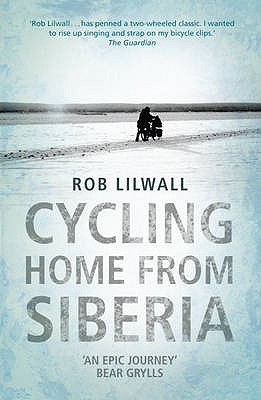
Cycling Home From Siberia: A Book Review of a Great Adventure

Photo courtesy of goodreads.com

With an Arctic cold front blasting through Texas right about now, what better time than now to do a book review about riding a bicycle through really cold places such as Siberia and Tibet. This book will motivate it's readers to grab their winter gear and harden up on their bicycles as they read the account of riding through sub-zero temperatures and rugged landscapes. This has to be one of my all time favorite reads, as it combines my love for cycling and travel into one ultimate adventure. In the following review I will do my best to summarize this book as objectively and accurately as I can.

The book begins in Magadan, a coastal town on the edge of Russia around September of 2004. Ten years the author's junior, at the time I had graduated high school that year and I was on my first fall semester in college. Rob Lilwall was already a college professor and an accomplished book salesman when he began his journey. What was originally planned as a one year journey through Siberia ended up in a three year tour of southeast Asia, the Pacific, Australia, India and the Middle East. The author goes into vivid detail describing the weather, majestic climbs and descending valleys as well as the hospitality of strangers, many of little means living in the developing world. What makes this book so great is the vivid imagery that the author uses to describe the people and landscapes. The author also makes us aware that although performing an incredible feat by cycling through most of the world, he is also human and at times struggles with inner conflicts. At the start of the journey his lack of confidence and insecurities glaringly show, but in the end his travels have made him a braver, experienced and more self-reliant person. The key to his success in his travels was that wherever he went, he made himself a likable guy. Every time he would go into a different country for example, he would translate a letter in the language of that country explaining why he was cycling around the world. Most people who read the letter were all too happy to give him a place to stay. 

The author also includes some short essays about religion in his book. He expresses his own views at times about his faith and has made an effort throughout his life to develop a moral compass, something that is severely lacking in today's society. Although he found a girlfriend throughout his journey, he strongly believed that relations before marriage were wrong and was able to keep the relationship going for the next two years until he returned to England and married her. That mirrors my own views that I personally have had about this subject throughout my life. The author also makes a distinction between those to practice the faith and those who give it a bad name. The author gives the example of how much of the debased entertainment made by hollywood is seen by foreigners to be coming from Christian people, under the assumption that all Westerners are religious and Christian and would practice what is on TV. Although a man of strong convictions, the author gives the impression that even he does not have a complete picture of everything involving his faith. Through his own account, he describes how rival churches in Papua New Guinea, although each professing to believe in the Bible, have intimidated and even killed each other seeing the other as competition for recruiting members. The bible defines Jesus's disciples as having love for one another (John 13:35). That means true Christians will not go to war against one another and will treat each other the same everywhere in the world.


Although the author credits and to some extent emphasizes the hospitality of Churches for giving him a place to stay, he was also taken in by many people who did not share his beliefs as many believed in Islam, Buddhism, Hinduism or whatever the predominant religion of the region was. It may have been the regional customs of hospitality and a sense of doing the right thing or simply human decency that motivated many of the author's hosts to take him in for the night rather than a shared religious belief. The author also recurrently mentions the church-backed aid organization that he is raising funds for to help needy children throughout the world. Although  there is no doubt the author has a strong and sincere desire to help others, that is not the be all end all expression of the Christian faith. Jesus also gave us the commandment to preach the good news and to make disciples of people of all nations (Matthew 24:14, 28:19). Those who go from door to door the way Jesus did and observing this commandment can be considered among those who practice true Christianity. Rather than focusing on the door to door ministry, many mainstream religions that call themselves Christian think they can achieve this by converting members through aid in developing countries, hence coining the phrase "Rice Christians". However, those who study the Bible know that the desire to serve God comes from the heart and not for personal gain. Those would be the talking points that I would engage the author with if I were to meet him in person. The author's efforts to practice Christianity are laudable and are better than most, however I have to respectfully disagree on more than one of the subjects he brought up in his book. I will have to say he took an objective approach in expressing his views and I was neither offended nor uncomfortable in reading his book. The mention of his faith and beliefs were inconsequential to the rest of the story. However, as a man of faith myself, I have to clear the air about this subject since I am recommending this book by reviewing it and would like to share the discrepancies that I found with readers of my blog. In conclusion, the religious views expressed in the book should be looked at as reference material only.*


The author makes us aware that his journey by bicycle wasn't some idyllic, stroll around a bucolic world, rather there were some nitty gritty and dangerous aspects about it as well. He was robbed twice, once at gunpoint and had to dodge border crossings while crossing Tibet, a country that he couldn't get a Visa to travel in and was therefore in the country illegally. He was chased by a mob of machete wielding bandits in Papua New Guinea and contracted malaria after his stay there. For those of you who like an adventure story, this book has that as well. 


In conclusion, this is a well rounded account of a world travel by bicycle and the obstacles and challenges faced by such a journey. This book answered a lot of my questions about bikepacking, world travel and what gear to carry with me if I were to go on such an expedition. I don't think that this type of adventuring is for me. Not everyone has the time or the resources that Rob Lilwall had when he made this journey. In ten years the world has also changed, and some of the countries he rode through have become more dangerous to outsiders. I would like to plan a weekend trip to a state park on bicycle one day. That is the only type of bikepacking that I can see myself doing in the near future. Maybe when my son is older we can do a father son bike tour, but definitely not on the scale of Lilwall's journey.

This was a good read and a remedy for my cabin fever. If the cold weather is bringing you down and you need some motivation to ride, definitely pick up a copy at a book store near you. 

Stay tuned for more reviews and posts and subscribe to my blog for more updates.

*Ten years ago, when I was in school, it was very common to have student theologians (Southern Baptists, never any other type of religion) visit our campus and have discussions about religion with anyone who would listen to them. The nearby church would host events in the school auditorium, often times with religious rock music inviting people to their church parties and I had to excuse myself from going to such events on many occasions. Back then school districts blurred the line between separation of church and state, something that is no longer heard of these days.  It was 2004, it was the Bush Era, and it was a bible-thumping under the guise of piety kind of time to be living in. Rob Lilwall is from that generation of theologians, that's why it doesn't bother me as much. 


Thursday, November 13, 2014

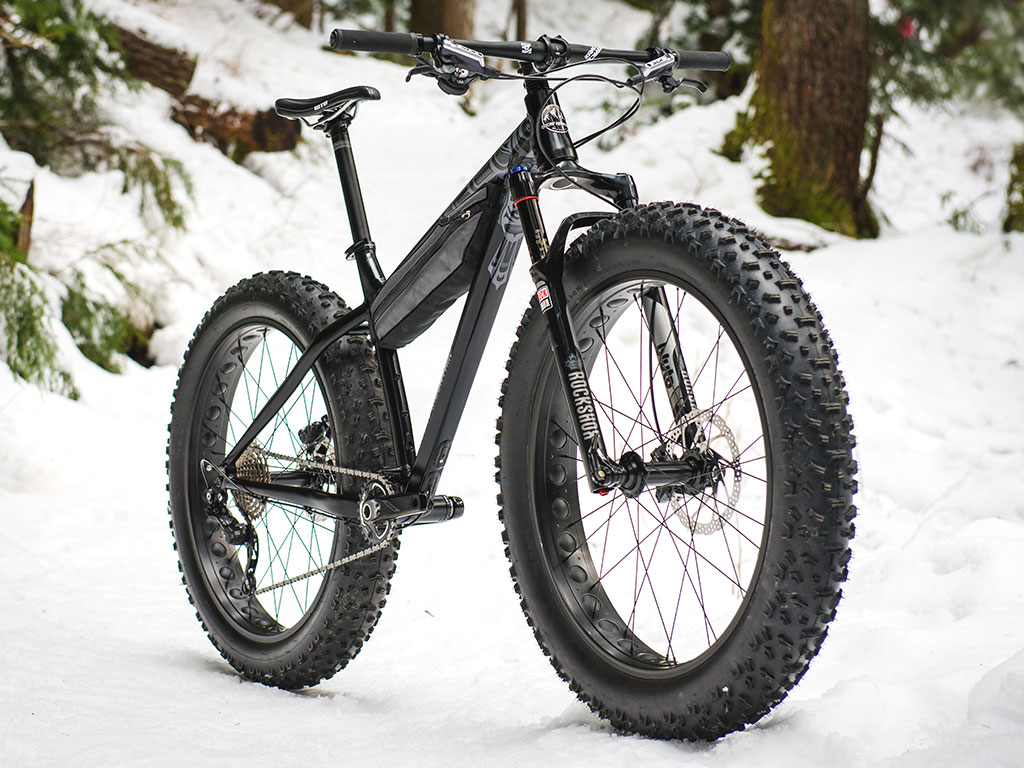
Fat Bikes...It's what's hot right now.

Fat bikes point to the future of mountain biking

Courtesy of fat-bike.com

After years of racing bikes being the predominant style of bicycle that has been constantly promoted to consumers, regardless of whether or not people had intentions to race, a new type of bike is making big waves in the mountain bike scene. Enter the fat bike, a bicycle that can go anywhere, do anything. We embrace it's arrival with open arms as we attempt to wrap around it's massive girth.

What makes fat bikes so special? The 4 to 5 inch tires leave a wider footprint that allows the bicycle to float over soft terrain such as snow and sand where regular tires would simply sink and become bogged down. This makes fat bikes capable of being taken off the trail to places once inaccessible to bicycles. Ever thought about riding a bicycle down the Oregon coastline? This bike can do that, and much more. The bicycle pictured above has a Rockshox Bluto fork, however a front shock is overkill for what most people will be using the bike for. The plush, wide tires offer plenty of shock absorption without the addition of a front fork. With the addition of a front fork, this bike can probably ride straight off a cliff without any problems whatsoever. 

Department stores have caught on early to the trend while most bike shops have not. You can now buy a department store, steel fat bike such as the Mongoose Beast or Mongoose Dolomite for around $200. Bike shop quality fat bikes start around $500 and up and are mostly found through online retailers. 

Since the invention of the mountain bike, people have wanted a bicycle that could test the limits of what is possible. However, the industry focused more on how to ride over terrain faster than seeking to test the limits of where a bicycle could be ridden. This bicycle may finally be the answer to that long awaited expectation. This is the biggest trend, as well as the only trend, happening in the world of bicycles at this time. Brick and mortar retailers need to zero in on this opportunity and stock as many of these bikes on their shelves as they can possibly fit in their stores. Forget 27.5 bikes, forget fixies. There is a downward trend of new bicycles being sold because there is simply no new interest to buy the same kinds of bikes that have always been around, maybe with a few tweaks but nonetheless the same candy with a different wrapper. This bike is a different thing altogether. I'm going to save up to buy one of these soon, and the sticker shock isn't going to deter me this time. I have personally not been as excited about a new type of bicycle hitting the market as I have been about the fat bike.  This bike, when purchased will complete my stable and may end up replacing my full suspension mountain bike. So stay tuned for a future review and keep subscribing to my blog for more posts.